
7 hr
Riyadh 4x4 Edge of the World Adventure with Stargazing
- Expert local guide
- Small group
- Skip-the-line access
- Free cancellation
Edge Of The World Hiking Tour — Jebel Fihrayn Cliff Access
Limestone falls away underfoot, the horizon keeps going.
Compare fares, pick the fit — all bookings are mobile-voucher and eligible for free cancellation where shown.
7 hr
6 hr 30 min
7 hr
Pick by city and terrain: Riyadh travelers doing an edge of the world hiking tour get an escarpment sunset, while Jeddah-based visitors reach a volcanic crater instead — both rank among Saudi Arabia's top landmarks, but they suit different bases and skill levels.
|
Top pick Edge of the World |
Al Wahbah Crater | |
|---|---|---|
| Nearest city | Riyadh | Taif |
| Distance and drive time | ~90 km, 1.5–2 hrs from Riyadh | ~250 km, 2–3 hrs from Taif (4 hrs from Jeddah) |
| Terrain type | Rocky escarpment, cliff-edge trail | Volcanic crater, salt-crusted basin |
| Vehicle requirement | 4x4 recommended, final stretch unpaved | 2WD sedan reaches rim, paved road |
| Entry cost | Free (0 SAR) | Free entry |
| Descent/access difficulty | Easy rim walk, no descent required | Steep 45-min hike down, 90-min climb back |
| Best time of day | 15:30–18:00 for cooler air and sunset | Early morning or after 3 PM, avoid midday heat |
| See tickets & prices |
Verdict: Choose the edge of the world hiking tour for an easy, free sunset walk near Riyadh, and Al Wahbah Crater if you're near Jeddah or Taif and want a tougher volcanic descent.
Hand-picked experiences loved by thousands of travelers
6 hours
Free Cancellation
Discover Saudi’s desert majesty with a thrilling 4WD trek to the iconic Edge of the World cliffs and a peaceful sunset picnic.
3 hours
Free Cancellation
Uncover ancient desert secrets and breathtaking mountain vistas on this thrilling 3-hour journey from Riyadh.
4 hours
Free Cancellation
Experience the Tuwaiq Mountains on this exclusive private trek through ancient caravan routes and dramatic cliffside vistas.
Group gathers at a designated Riyadh meeting plaza before the off-road transfer begins
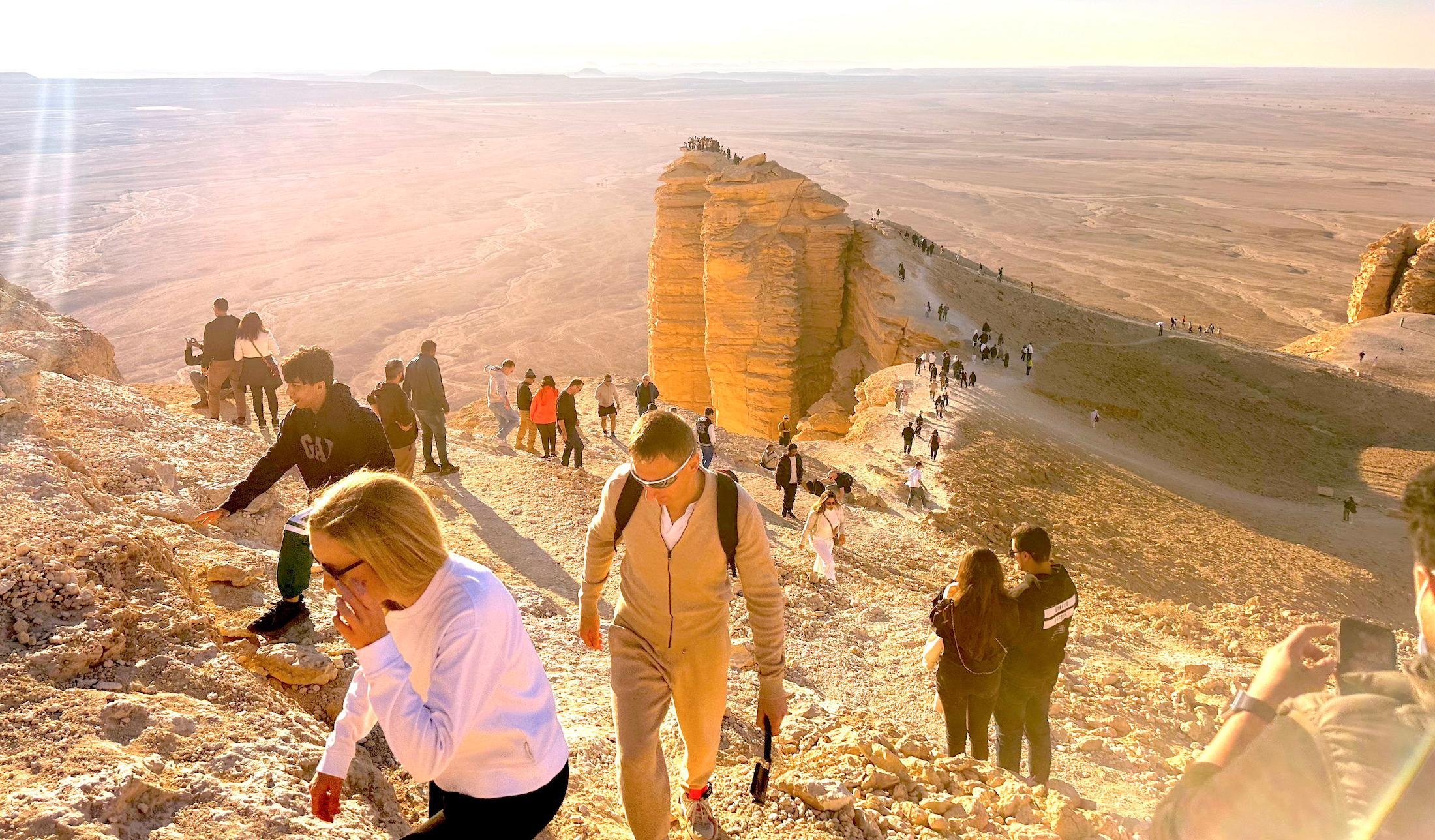
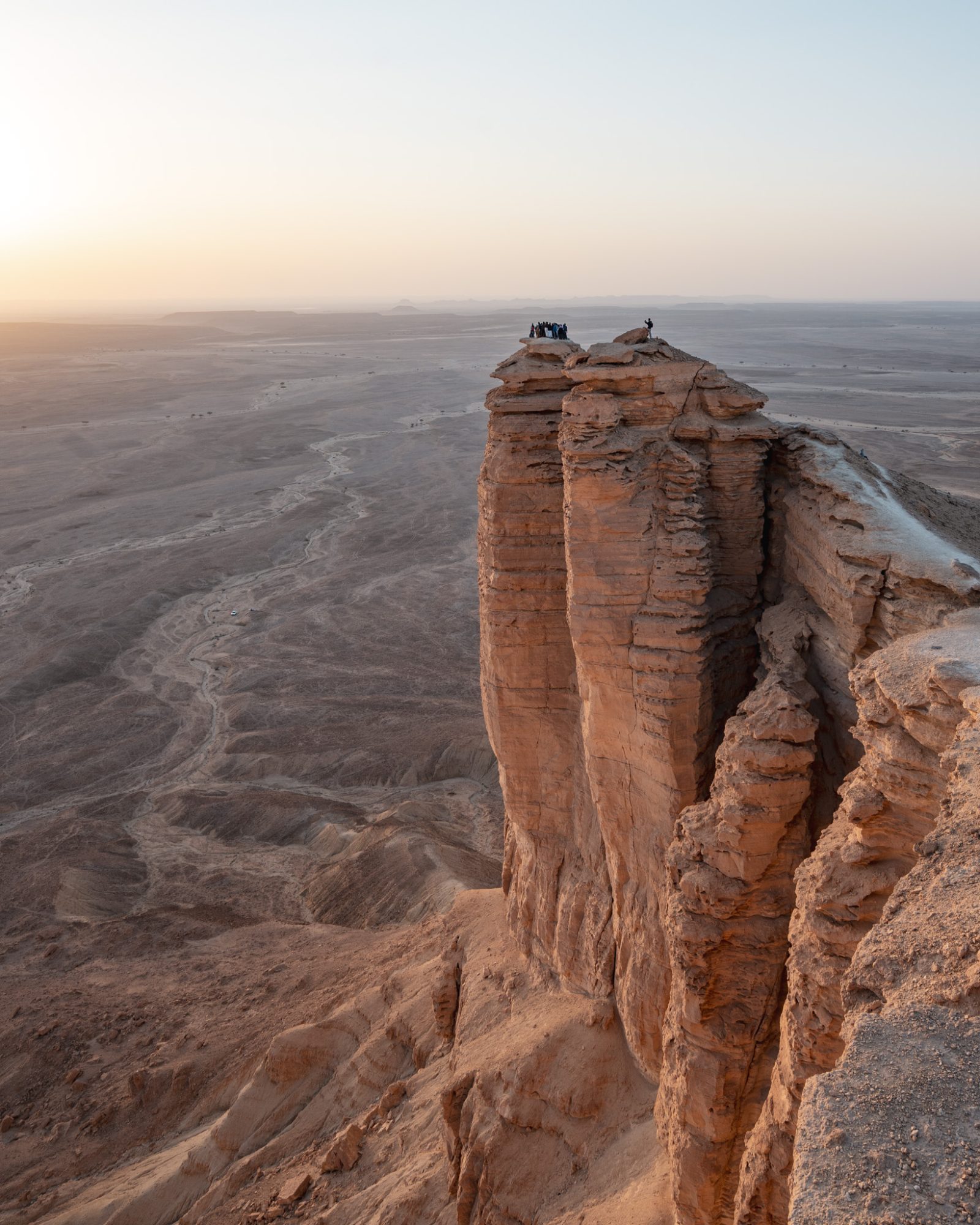
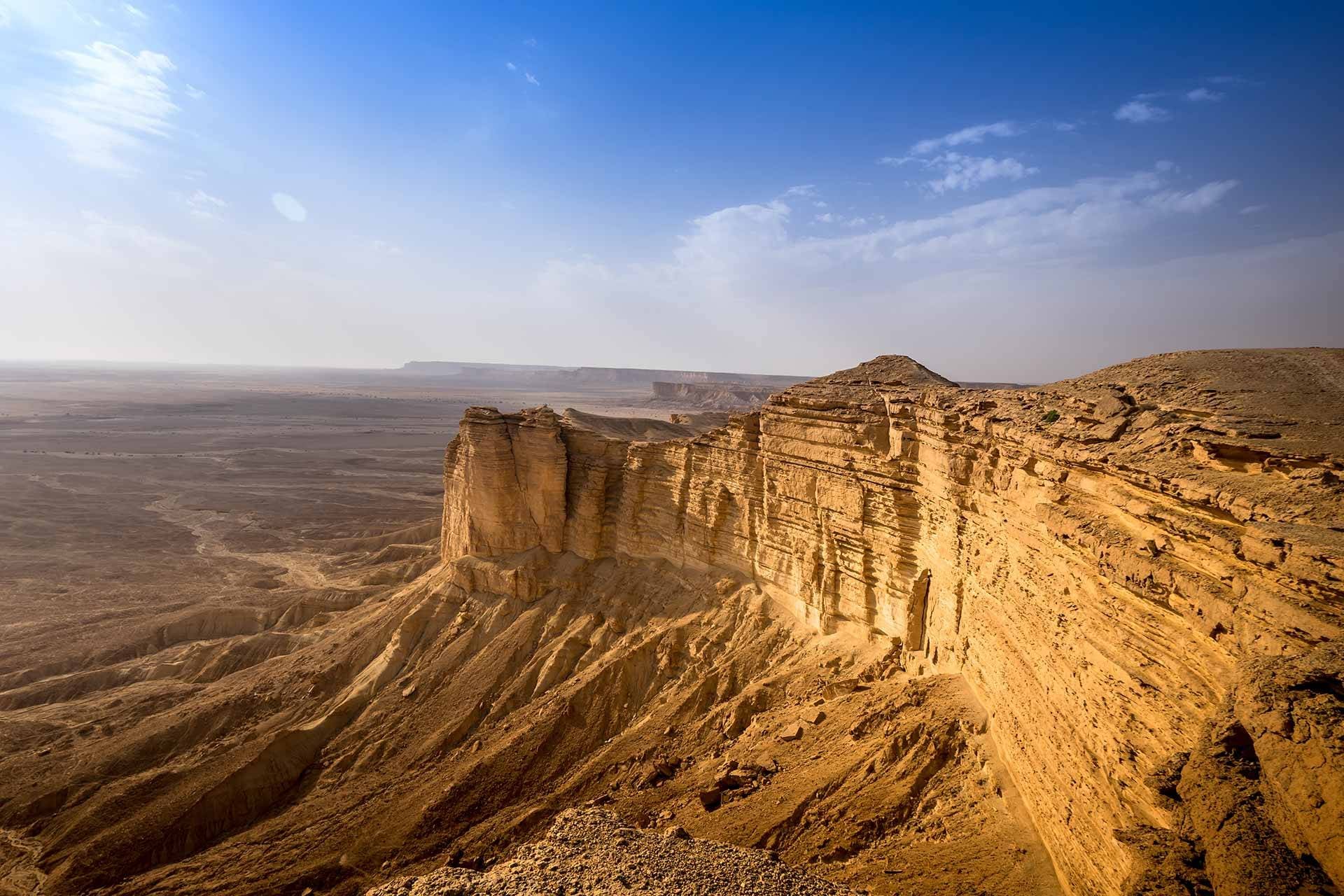
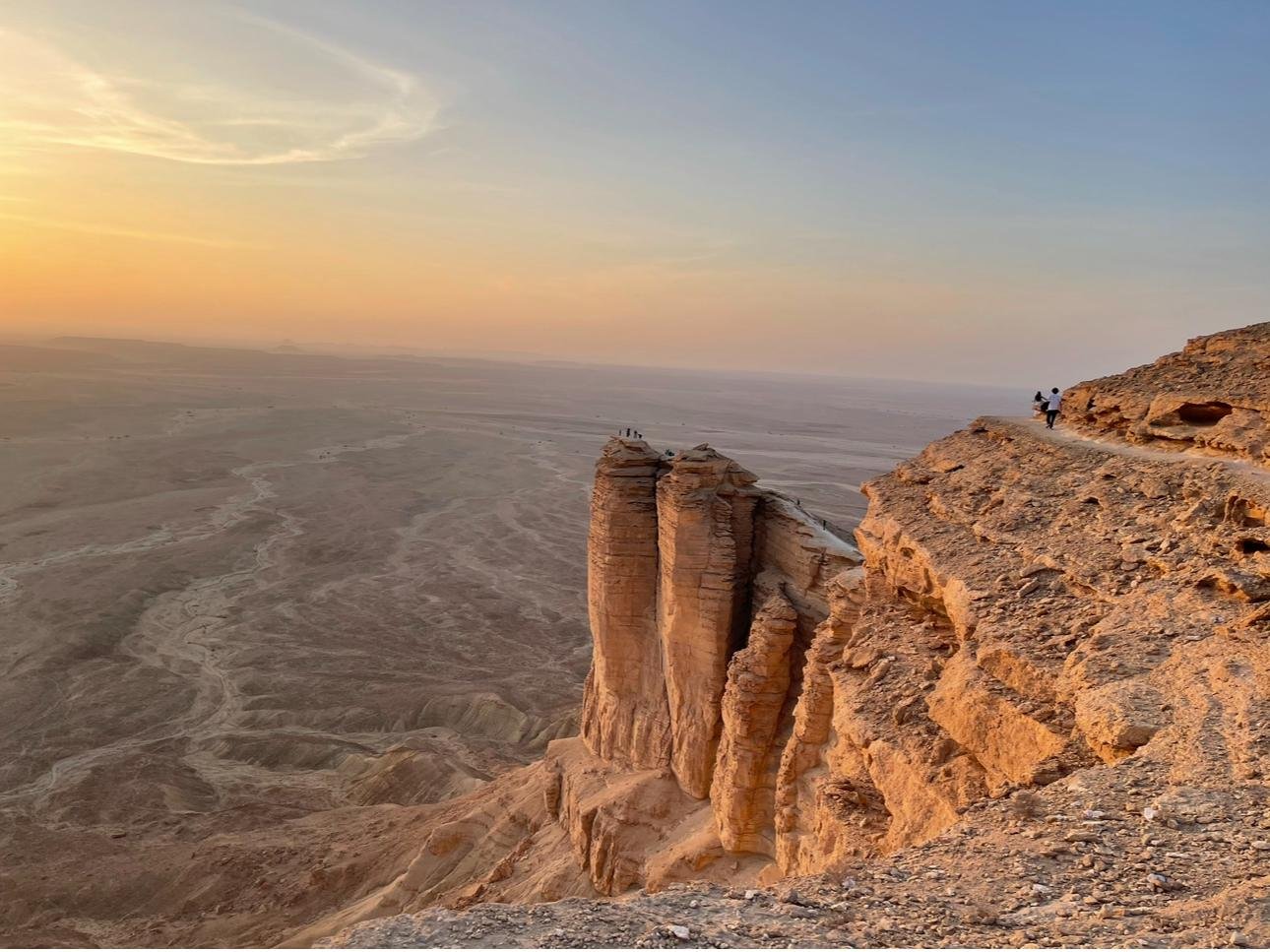
The main escarpment edge rises roughly 300 meters above the plain below, giving the site its Edge of the World nickname from the uninterrupted horizon view. The rock face marks the boundary of an ancient seabed, and prehistoric marine fossils are still visible embedded in the exposed layers.
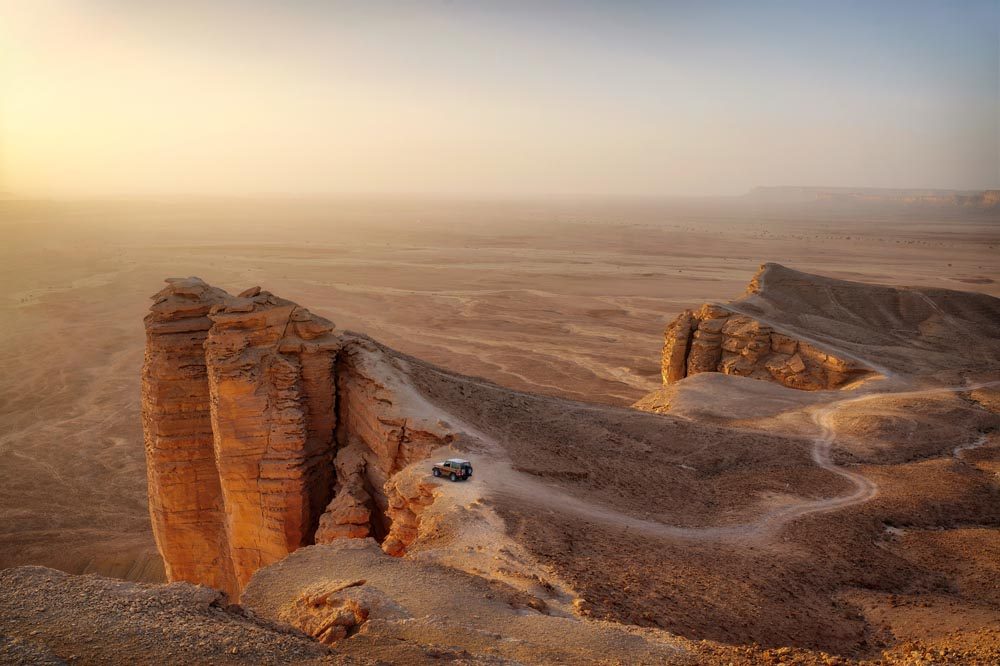
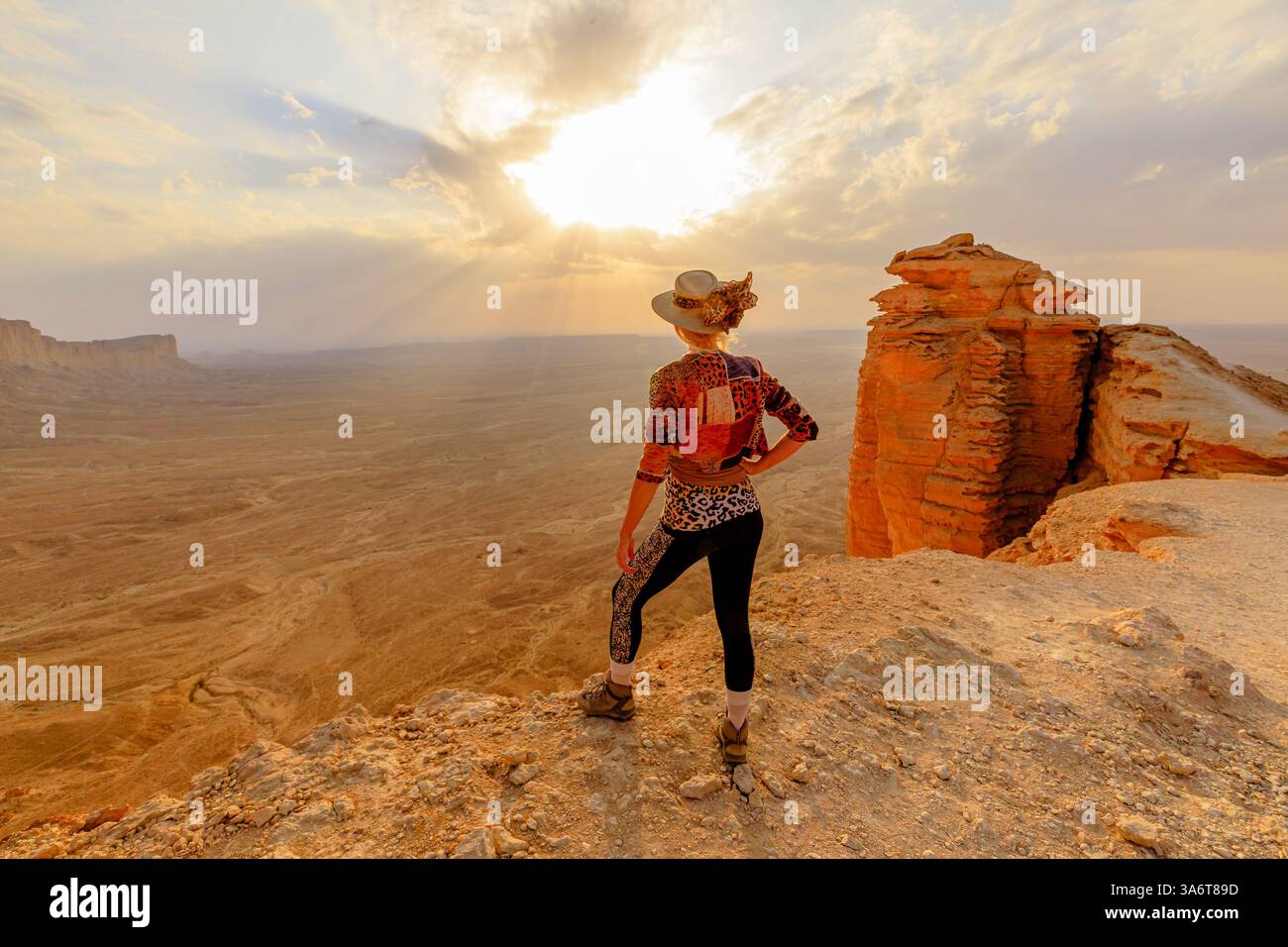
You leave Riyadh with the light already softening and watch the city thin into scrub, then into nothing. The asphalt ends. For the last stretch your driver drops tyre pressure and the vehicle starts to float over graded sand and washboard track, and the escarpment appears ahead as a low pale line that refuses to resolve into scale until you are almost under it. You park in a shallow bowl of gravel. The walk up is short — twenty minutes of loose scree and one shelf of rock you take with your hands — and then the ground simply stops. You stand on a limestone lip roughly two metres wide with the plain three hundred metres below, and the first thing you notice is the silence, which is total, and the second is the wind, which is not. Your guide points out the fossil beds in the wall beside you, shells pressed flat into stone laid down when this was seabed. You follow the ridge north, keeping three or four metres back from the edge where the rock is undercut. There are no railings anywhere on an edge of the world hiking tour, and no shade. By 17:00 the cliff face has gone orange and the shadows of the promontories stretch out across the valley floor like fingers. You sit. You drink most of your water. The site empties slowly as the sun drops, and you walk back down to the vehicles with the last of the light behind you and Riyadh's glow rising ahead.
All the details about your upcoming adventure in one place
An edge of the world hiking tour takes you northwest of Riyadh to Jebel Fihrayn, where the Tuwaiq Escarpment breaks off in sheer limestone cliffs above the open desert plain. Most edge of the world hiking tour tours travel by 4x4 over graded desert track, then continue on foot along the ridgeline to the main viewpoint. Guides handle permits, navigation, and water, so the walking portion stays the focus.
The cliff that ends the world costs nothing to stand on: entrance to Jebel Fihrayn is 0 SAR, an open natural site with no gate, no ticket booth and no fence between a visitor and a 300-metre drop. That absence is the defining fact of the place. Ninety kilometres northwest of Riyadh, in Huraymila Governorate, the Tuwaiq Escarpment breaks off in a long pale wall of limestone, and the plain below runs flat to a horizon with nothing on it. Saudis call it Nahayat Al Alam. The English name arrived with expatriate workers decades ago and stuck because it is literal rather than poetic. The escarpment itself is a 800-kilometre arc of Jurassic seabed, lifted and then cut back by erosion, and Jebel Fihrayn is simply the point where the cut is cleanest. Old caravan tracks threaded the valleys beneath it; those routes and the geology behind them are a longer story than this page can hold. What matters here is the shape: a promontory, a ridge behind it, and a series of lower shelves that let visitors approach the drop by degrees rather than all at once. Why the site matters now has less to do with antiquity than with access. A decade ago reaching it meant a private 4x4, local knowledge and a willingness to be lost. Today an edge of the world hiking tour handles the graded desert track, the last few kilometres of soft sand, and the navigation that a rental sedan cannot manage. Operators run edge of the world hiking tour tours in small convoys, and the Tuwaiq escarpment trek has become one of the most requested day trips out of the capital — not because the walking is hard, but because the payoff is so unusually abrupt. Architecturally there is nothing built here, and that is the point. The interest is structural: horizontal bedding planes stacked like masonry courses, wind-cut alcoves, scree fans spilling from the base, and a summit platform of bare rock roughly the size of a small plaza. Fossil shells sit in the limestone at eye level, evidence of the shallow sea that laid the stone down. Lighting does the rest of the work. The recommended arrival window of 15:30–18:00 exists because the low sun rakes across the cliff face and turns the escarpment gold, and because the site is legally open 24 hours — 00:00–23:59, every day — which makes visitor discipline, not opening times, the limiting factor. Saudi Arabia's tourism programme has brought signage, cleanup crews and licensed guides to a place that had none. The character of a good edge of the world hiking tour now depends on whether the operator treats the cliff as scenery or as terrain that demands respect.
The cliff that ends the world costs nothing to stand on.
Wear closed, sturdy hiking shoes since the escarpment trail is rocky limestone with loose gravel near the cliff edge. Light, breathable, modest clothing is recommended given Riyadh's desert heat and local dress norms; a light jacket helps for cooler evening descents into the Bin Rasheed cave area.
There is no formal security screening or bag check since this is an open natural site rather than a gated attraction, but operators running an edge of the world hiking tour do a headcount and gear check before the trail descent. A small daypack with a secure closure is recommended for the uneven cliff-edge terrain.
Photography and drone use are common along the Tuwaiq Escarpment cliff edge, though drone flights may require prior permission under Saudi civil aviation rules. Tripods are fine on the plateau but discouraged right at the unguarded 300-meter drop for safety reasons.
Most operators recommend the hike for children aged 6 and above with direct parental supervision near the cliff edge. There are no railings anywhere on the escarpment, so families should keep young children away from the drop at all times.
The main plateau near the parking area is walkable on relatively flat ground, but the cliff-edge viewpoints and any bat cave detour involve uneven limestone, loose rock, and unguarded drops with no paved paths, ramps, or railings. Wheelchair and stroller access is not feasible beyond the vehicle drop-off point.
There are no restaurants, kiosks, or vending machines at the site itself, so bring your own water and snacks. Many edge of the world hiking tour packages include bottled water, light snacks, or a desert-camp dinner as part of the booking.
Open natural site, no gate
Open 24 hours, best arrival 15:30–18:00 for cooler temperatures and sunset
location
Car · ~90-120 min · Fuel cost only, no parking fee
Self-drive from Riyadh takes roughly 90 minutes to two hours via Highway 65 and rural desert roads, with the final stretch requiring a 4x4 vehicle for off-road sand and rock. Parking is informal and unpaved near the escarpment rim.
Entrance to the site itself is free (0 SAR, open natural site with no gate), so no refund applies to entry. Guided edge of the world hiking tour bookings through tour operators typically allow a full refund if cancelled at least 24 hours before the scheduled departure time.
Recommended time
Half a day (4-6 hours round trip)
Most of that time is the road, not the site itself: figure 1.5-2 hours each way from Riyadh, plus a short walk of 10-15 minutes from the parking area to the main viewpoint along the escarpment. Once at the rim, an edge of the world hiking tour typically runs 1.5-2 hours of walking between lookouts, which is enough for the escarpment views without rushing. There is no ticket queue since entry is free, but arrival timing matters more than any line: leaving Riyadh too late is the real bottleneck, as many self-drivers underestimate the drive and miss golden hour entirely. Add buffer time if you are self-driving the dirt-road final stretch, since getting lost or stuck in sand can easily cost an extra hour.
Crowd levels through the day
Weather · crowds · average price — dots go green to amber to red as each metric rises.
Daytime temperatures are mild, roughly 15–25°C, making midday hikes comfortable. This is the peak season for an edge of the world hiking tour, with the highest visitor numbers on weekends.
Because the final approach requires off-road 4x4 driving, most visitors join a licensed edge of the world hiking tour rather than attempting self-drive without off-road experience.
King Salman Oasis Metro Station, Riyadh
Common pickup point reachable by metro or car
Get directionsThe rock came first, and it came from water. During the Jurassic period, roughly 150 million years ago, the land now called Jebel Fihrayn lay beneath a shallow tropical sea on the margin of the Tethys Ocean. Carbonate mud settled there for millions of years. It hardened into the limestone that forms the Tuwaiq Escarpment today, and it trapped the animals that lived in it. Ammonites, bivalves, brachiopods and crinoid stems remain visible in the pale beds along the cliff edge. Visitors on an edge of the world hiking tour still find them weathering out of the surface, undisturbed because the site has no gate and no excavation programme. The cliff itself is younger than the stone. Its shape belongs to the Cenozoic. From about 30 million years ago, rifting split the Arabian Plate from Africa and opened the Red Sea, tilting the whole Arabian Shield gently eastward. The uplifted western flank drained toward the Gulf, and erosion stripped softer marls from beneath the resistant Tuwaiq limestone until the beds broke away in a retreating arc. That arc now runs some 800 kilometres through Riyadh Province. The 300-metre drop at Huraymila is one of its sharpest points, and it is the reason Jebel Fihrayn became one of the most visited Riyadh landmarks. Human use of the escarpment is comparatively recent but well attested. The plain below the cliff carried caravan traffic between the Najd interior and the trading towns of the north, and the Darb Zubaydah pilgrim road from Kufa to Makkah passed through this quarter of central Arabia from the late eighth century onward. Wells, cisterns and stone waymarkers along that corridor served caravans for a thousand years. Camel tracks are still legible on the valley floor from the rim. Modern access followed the paving of the Riyadh–Huraymila road in the twentieth century, and organised edge of the world hiking tour tours began operating from the capital as desert recreation grew. Guided edge of the world hiking tour tickets are not required at the site itself: entry is 0 SAR, open around the clock, and the escarpment remains an ungated natural monument.
Carbonate mud accumulates on a shallow Tethys seabed, later lithifying into the Tuwaiq limestone.
Ammonites, bivalves and crinoids are entombed in the sediment, forming the marine fossil beds visible today.
Red Sea rifting separates the Arabian Plate from Africa and tilts the Arabian Shield eastward.
Differential erosion of soft marls undercuts the limestone caprock, carving the 800-kilometre escarpment arc.
The Darb Zubaydah pilgrim and trade road is developed with wells and cisterns across central Arabia.
Caravans between Najd and the northern trading towns cross the plain beneath Jebel Fihrayn.
Paving of the Riyadh-Huraymila road brings vehicle access within reach of the cliff rim.
The site remains ungated and free to enter, with a guided edge of the world hiking tour departing from Riyadh.
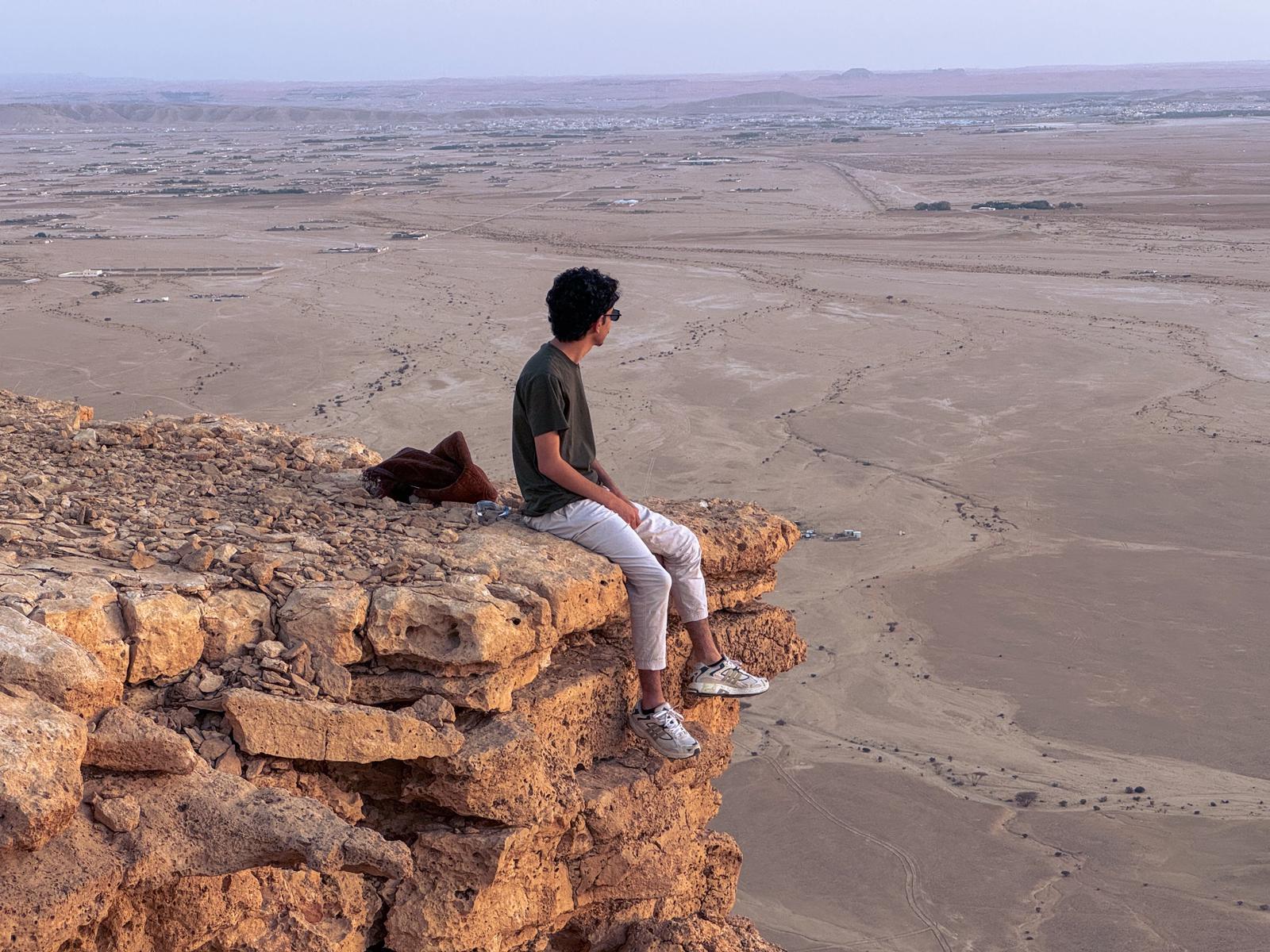
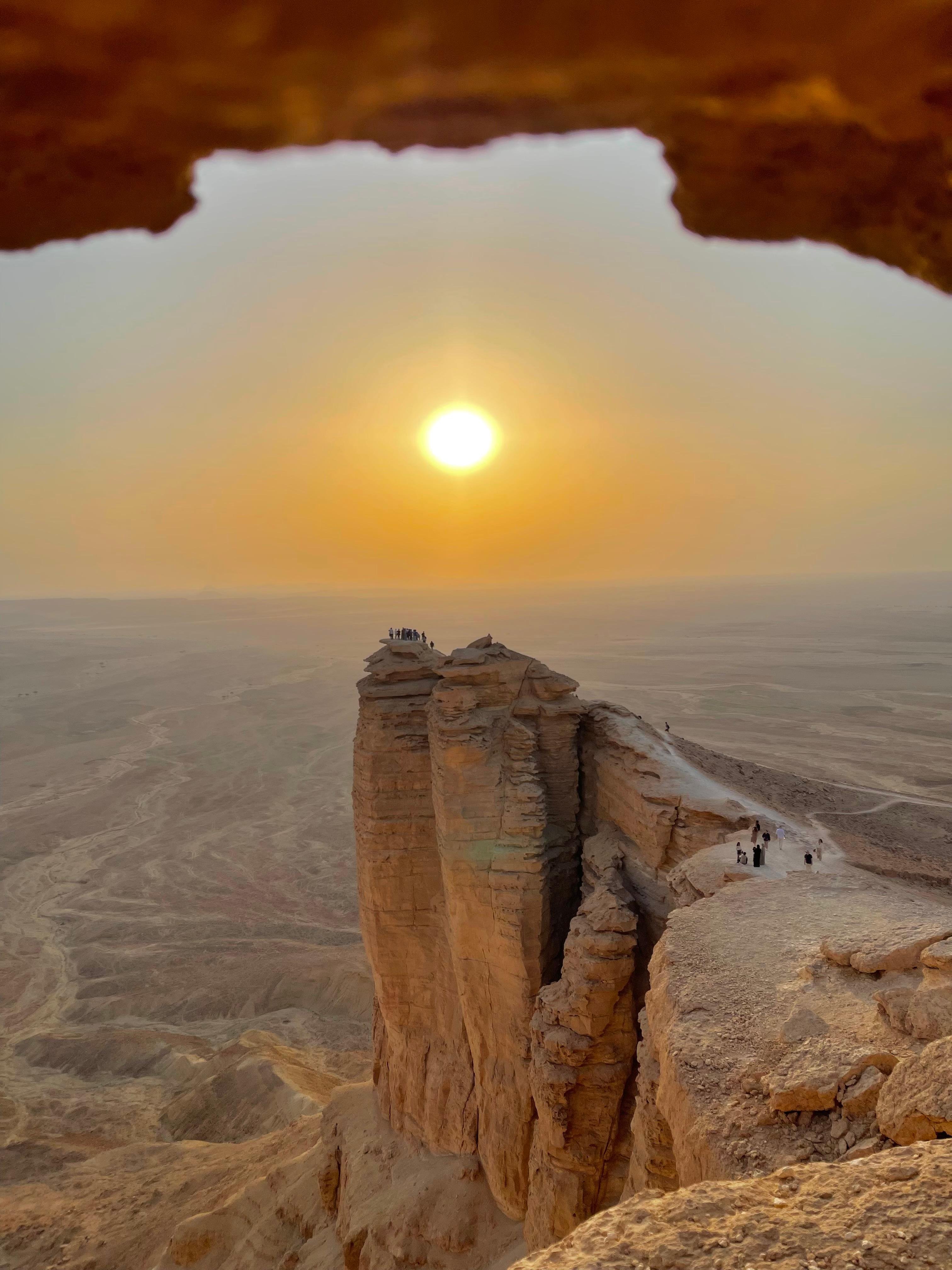
The primary cliff-edge viewpoint where the Tuwaiq Escarpment drops away in a sheer 300-meter wall, giving an unbroken horizon line over the ancient ocean bed below. Stand a few meters back from the lip on the flat sandstone shelf and shoot straight out toward the haze-blurred plain; this is the classic frame most people booking an edge of the world hiking tour come for. Loose gravel means keeping children and tripods well clear of the actual rim.
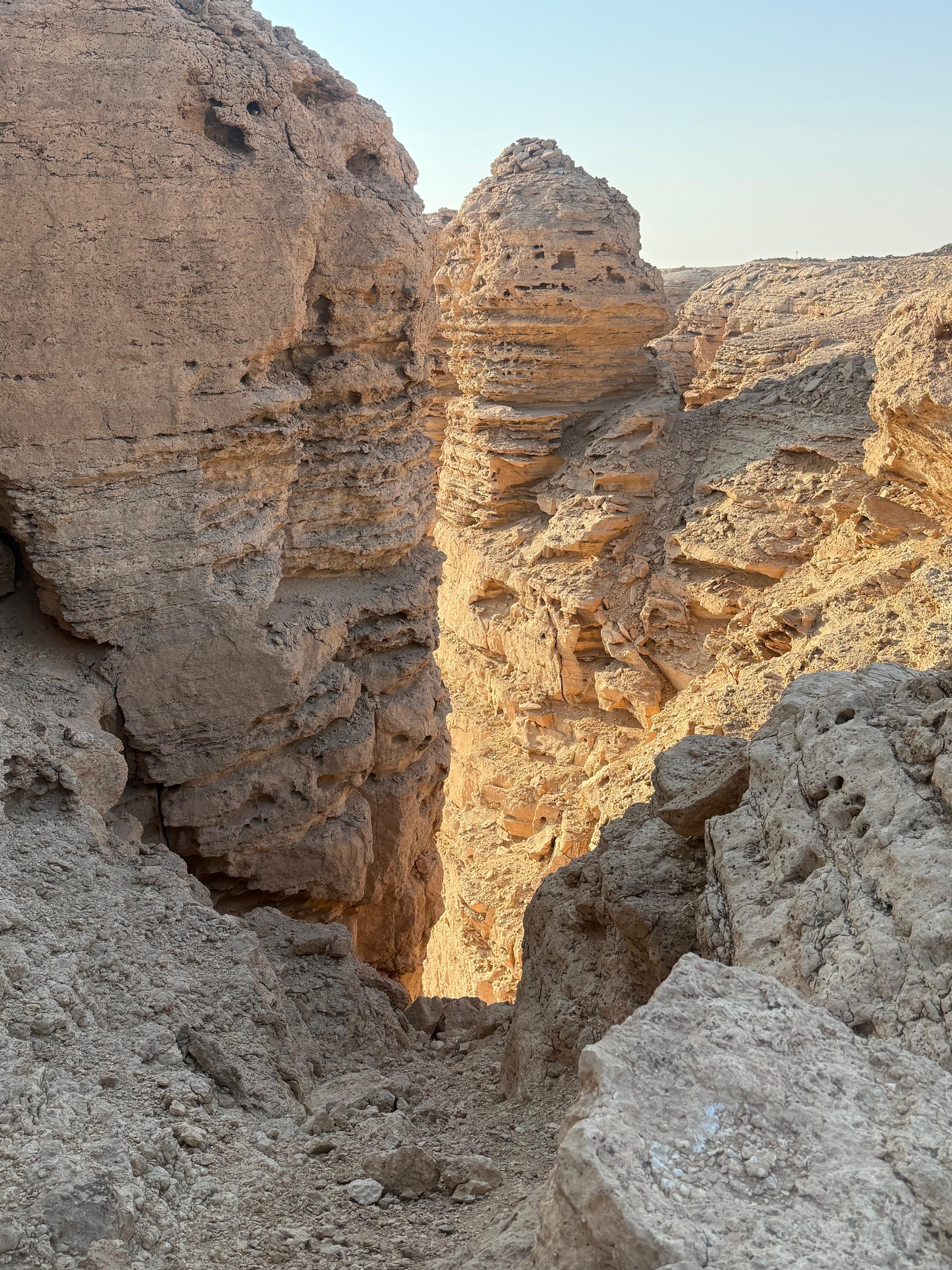
A narrow natural rock gap eroded through the escarpment wall, framing the lower plateau like a stone doorway and doubling as the descent route down. Photographers position a subject inside the gap looking out, using the rock frame to compress the view of the valley beyond. Footing is uneven scrambling over boulders, so this shot works best with sturdy shoes and a free hand.
A green pocket of acacia trees and scrub breaking up the otherwise bare limestone and sand, shot from the upper trail looking down into the valley for a color contrast against the escarpment. Best composed with the tan cliff face as a backdrop to the trees. Access on this side is only open Fridays and Saturdays via the gated route.
A lower ledge along the escarpment where old caravan paths are still visible as faint tracks cutting across the plain, often with camels and herders passing below. Shoot with a long lens from the cliff-top down toward the trail for scale against the cliff wall. Sun angle from the west lights the escarpment face directly during golden hour, throwing long shadows across the ledge.
An edge of the world hiking tour is a genuine desert adventure with kids rather than a stroller-friendly outing, since the final stretch to Jebel Fihrayn is unpaved and 4x4-only. Families who prepare for rough ground, no facilities, and unfenced cliffs get a rewarding, manageable afternoon at the escarpment.
Not usable at any point after the paved highway ends; the gravel track and rocky viewpoint approach require carrying young children or using a sturdy baby carrier instead.
School-age children who can follow instructions and stay close to a parent handle the unfenced drop-offs far better than toddlers, who need constant hands-on supervision near the rim.
There are no toilets, shade structures, shops, or water points on site, so use a petrol station in Riyadh for a comfort break and pack all food, water, and sun protection before leaving the city.
The walk from parking to the main viewpoint takes 10-20 minutes over loose stones and uneven rock, so let young children set the pace and plan frequent pauses rather than rushing toward golden hour.
Keep children within arm's reach at all times and stay several metres back from the unguarded edge, since there are no railings anywhere along this desert landmarks route.
Bring a packed picnic and eat it away from the immediate cliff edge, ideally in a flat, shaded spot near the vehicles rather than right at the viewpoint.
Real experiences from real travelers
We left Riyadh before dawn and the light hitting the Tuwaiq escarpment as we arrived was worth the early alarm. The edge of the world hiking tour got us onto the rim with time to walk the promontory before the heat built. Bring more water than you think — there is zero shade up there.
Standing at the rim of Jebel Fihrayn, the only sound was wind moving over limestone. Our guide pointed out fossil shells in the rock underfoot, which I did not expect on a cliff 300 metres above a dry valley floor. The approach track needs a proper 4x4, so do not attempt it in a rental sedan.
Ninety minutes of gravel track from the highway and then the plateau just drops away in front of you. Booking edge of the world hiking tour tickets in advance meant we skipped the scramble to find a driver at the last minute. The scree section near the top is loose — decent shoes matter more than fitness here.
Went in winter and the wind at the escarpment edge was genuinely biting, so pack a layer even though it is a desert. The views across the old caravan valley are enormous and the photos barely convey the drop. Only marking it four because our group was a little large for the narrow ledges.
We timed the walk so we reached the far viewpoint as the sun went low, and the layered rock turned deep orange. The guide handled the route confidently and kept everyone back from the unprotected edges. Riyadh landmarks are impressive, but this felt like the one place with real scale.
I had assumed it would be a short photo stop, but the edge of the world hiking tour actually covers a decent stretch of the plateau with a proper climb at the end. Sand in everything by the end of the day, which is part of the deal. Sturdy boots, sunglasses, and a hat are non-negotiable.
Summer meant a very early start, and by nine the rock was already radiating heat. Even so, looking down the sheer Tuwaiq cliff to the acacia-dotted floor below is something I keep thinking about. Our driver knew exactly which side tracks were passable after the rain.
The desert track out to the escarpment is genuinely rough and took longer than we were told. Once there, the walk along the rim is straightforward with one steeper scramble. Riyadh desert escarpment tours are common now, so compare what is actually included before booking.
Our guide showed us marine fossils embedded in the limestone, a strange thing to find hundreds of metres up. Walking the plateau at first light with no one else around was the highlight of the trip. The 4x4 transfer was comfortable and the group stayed small.
We joined one of the sunrise edge of the world hiking tour tours and had the promontory almost to ourselves for half an hour. The pale rock, the dry valley, the total absence of sound — hard to find that anywhere else near a capital city. Take a rehydration sachet for the drive back.
Everything you need to know for your journey
Jebel Fihrayn is an open natural site with no gate, so it is accessible 24 hours a day, every day of the week; most guided departures are scheduled for the 15:30–18:00 window to catch cooler temperatures and sunset light.
No, entry to the site is free at 0 SAR since it is an open natural landmark with no gate or ticket booth; any cost comes from booking a guided edge of the world hiking tour with transport and equipment.
No, the cliff-edge trail and any cave detour involve uneven limestone and unguarded drops with no paved paths or railings, so it is not accessible for wheelchairs or strollers.
Glass bottles, open flames, fireworks, unauthorized drones, alcohol, and loudspeakers are among the items to avoid bringing on the trail.
There is no formal security screening since this is an open natural site, though operators typically do a gear and headcount check before the cliff-edge descent.
Photography is welcome along the escarpment, but drone flights may need prior authorization under Saudi aviation rules, and tripods are best kept away from the unguarded cliff edge.
Winter and early spring offer the mildest daytime temperatures for booking edge of the world hiking tour tickets, while summer visits are best scheduled for the 15:30–18:00 arrival window to avoid peak heat.
Sturdy closed-toe hiking shoes and light, breathable, modest clothing are recommended given the rocky terrain and desert climate.
No, there are no shops or restaurants at the site, so bring your own water and snacks; some edge of the world hiking tour packages include bottled water, snacks, or a desert dinner.
Most edge of the world hiking tour operators depart from a Riyadh meeting point such as King Salman Oasis Metro Station, reachable by metro, taxi, or car before transferring by 4x4.
Yes, many operators welcome children aged 6 and above with direct parental supervision, since there are no railings anywhere along the cliff edge.
Most operators offer a full refund if you cancel at least 24 hours before the scheduled departure time; the site's own entry remains free regardless of cancellation.
Nearby options include the Bin Rasheed cave, the historic Al-Manjoor Trail, additional Tuwaiq Escarpment viewpoints, and Qarina Heritage Village, all reachable within a short drive of the main trailhead.
A quartz-lined cave roughly 120 meters deep with a resident bat colony and visible fossil deposits in its walls. It sits just off the main escarpment trail and is a common add-on stop.
Most visitors base themselves in Riyadh itself, since there is no lodging directly at the escarpment. The city offers everything from luxury towers to budget stays within reach of tour pickup points.
Join thousands of happy travelers who have discovered this incredible experience
Book Your Experience Now