
October-April
This is the core season, with December-February sometimes bringing brief post-rain desert blooms along the escarpment.
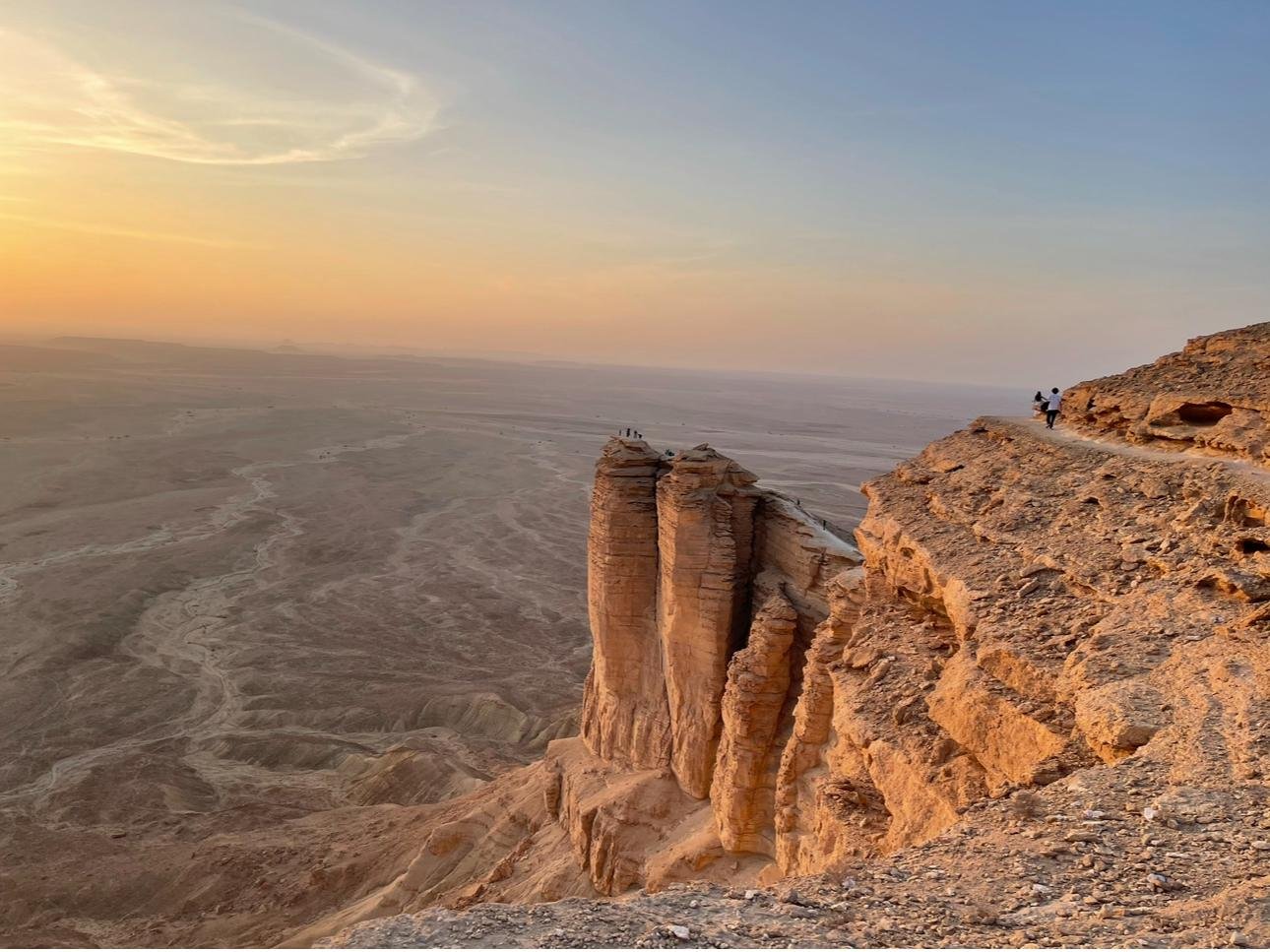
A 300-metre limestone escarpment north-west of Riyadh, reached by 4x4 across open desert plain.
The stone at the cliff edge was once a seabed. Shells and coral fragments sit fossilised in the pale limestone of Jebel Fihrayn, evidence that central Arabia lay beneath warm shallow water long before it became desert. Travellers walk over that ancient reef without noticing it, their attention fixed on the drop ahead.
Geology gave the Tuwaiq Escarpment its shape, and caravans once used its ridgeline as a navigational marker. But what defines the place now is emptiness rather than history. There is no ticket office, no visitor centre, no railing along the promontory. The site sits within the Riyadh Province wilderness, and the last stretch of approach dissolves into unmarked desert track. This absence of infrastructure is the reason Edge of the World Tours exist at all: the landmark is functionally inaccessible without a guide and a capable vehicle, which has kept it from the erosion that follows easy access. Arriving here still feels like arriving somewhere.
The site is best understood as several distinct experiences layered on one landform. A private 4x4 outing gives small groups control over pace and stopping points along the ridge. A sunset visit turns the western cliff face into a study in shifting colour as the plain below falls into shadow. Hiking and adventure routes descend into the wadi system behind the escarpment, where acacia and dry riverbed replace the open view. Combining the cliffs with Diriyah — the mudbrick capital of the first Saudi state — sets raw geology beside built heritage in one outing. Overnight camping strips the experience back to the simplest version: a fire, a horizon, and a sky uncontaminated by city light. Booking Edge of the World Tours tickets in advance matters mainly because operators cap group sizes on the desert track.
The destination rewards a particular temperament. Anyone drawn to Riyadh landmarks for their architecture may find the escarpment austere; anyone who values scale, silence and rough terrain will find little in the Arabian Peninsula that matches it. Photographers work the promontory for the foreground-to-infinity composition that gives the place its name. Geologists and fossil hunters read the exposed strata. Families with older children manage the ridge walks comfortably. An Edge of the World Tours tour asks for sturdy footwear, real water reserves and a tolerance for corrugated track, and returns a view that photographs poorly and remembers well. Among Edge of the World Tours tours across the region, this remains the one where the landscape does all the work and the operator simply gets you there.
“The stone at the cliff edge was once a seabed, and travellers walk over that ancient reef without noticing it.”
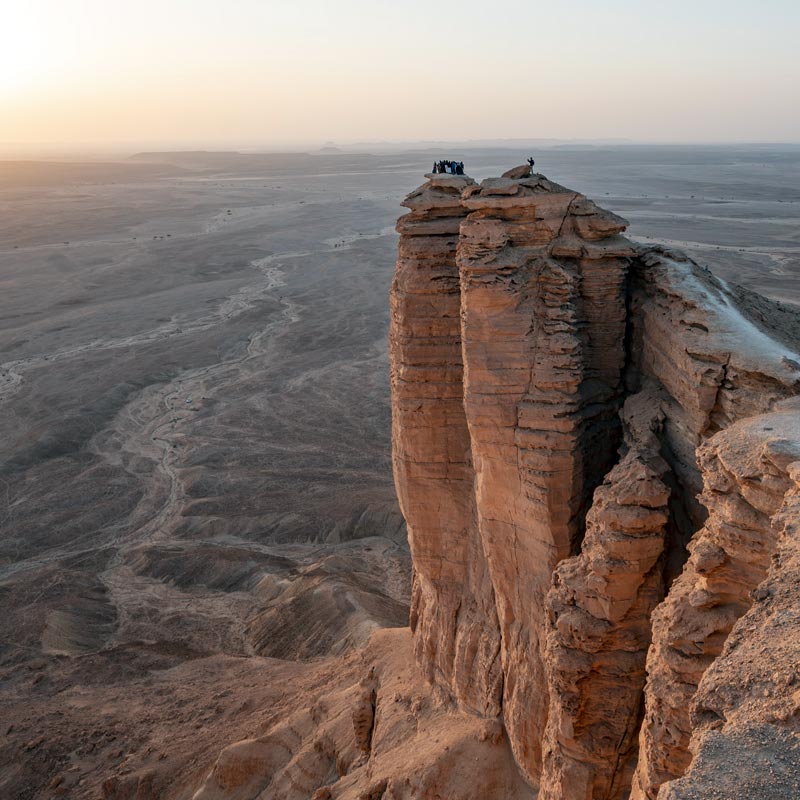
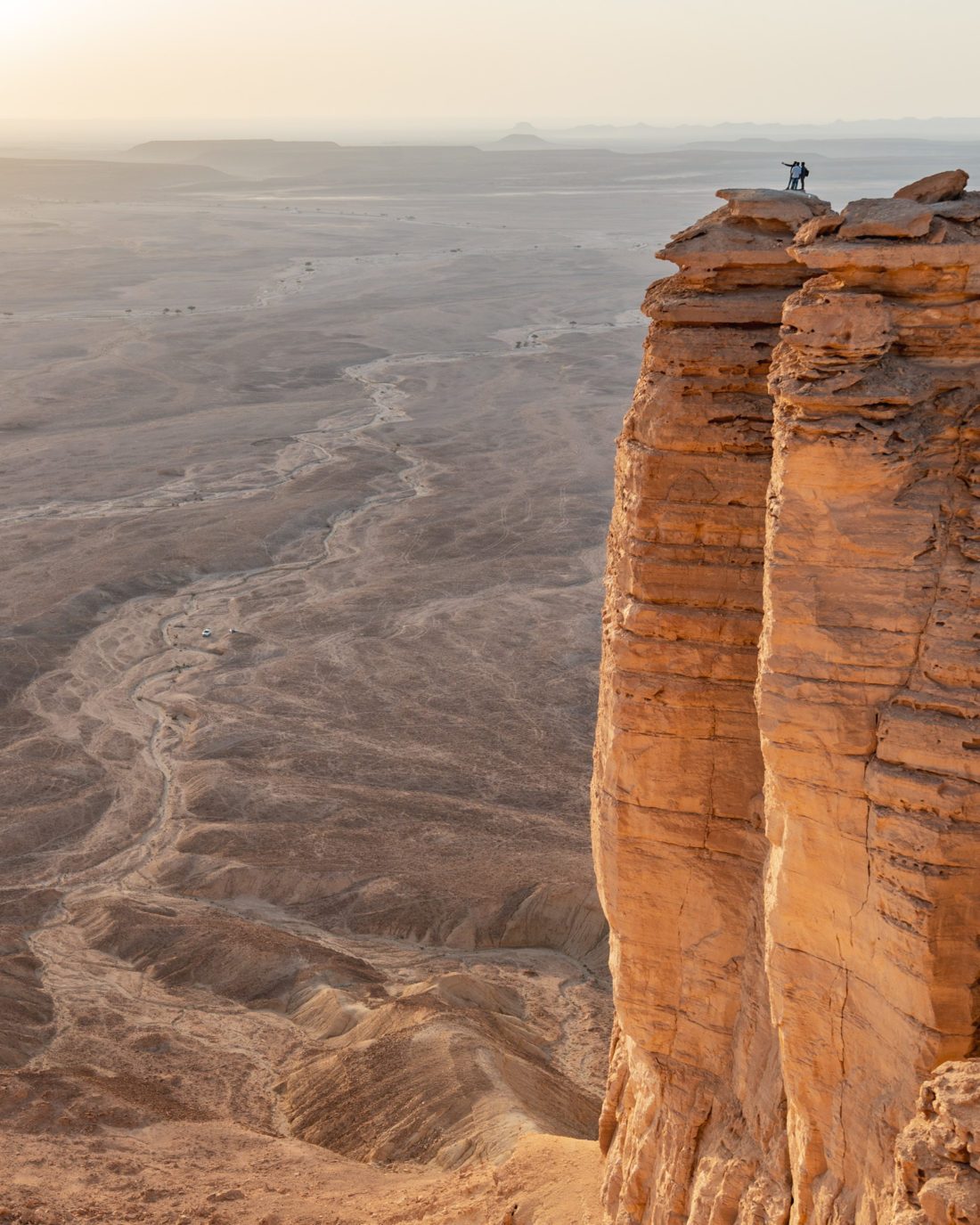
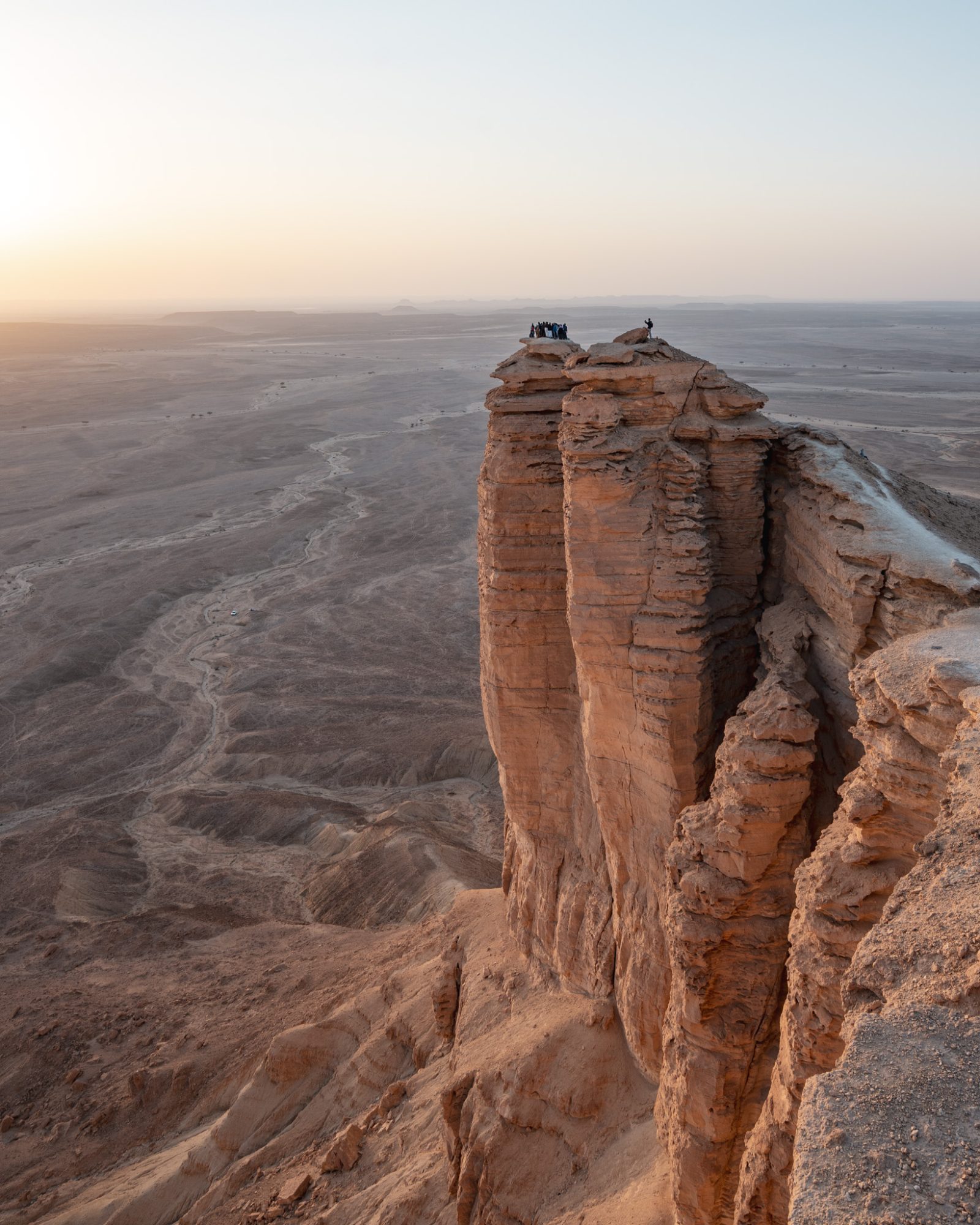
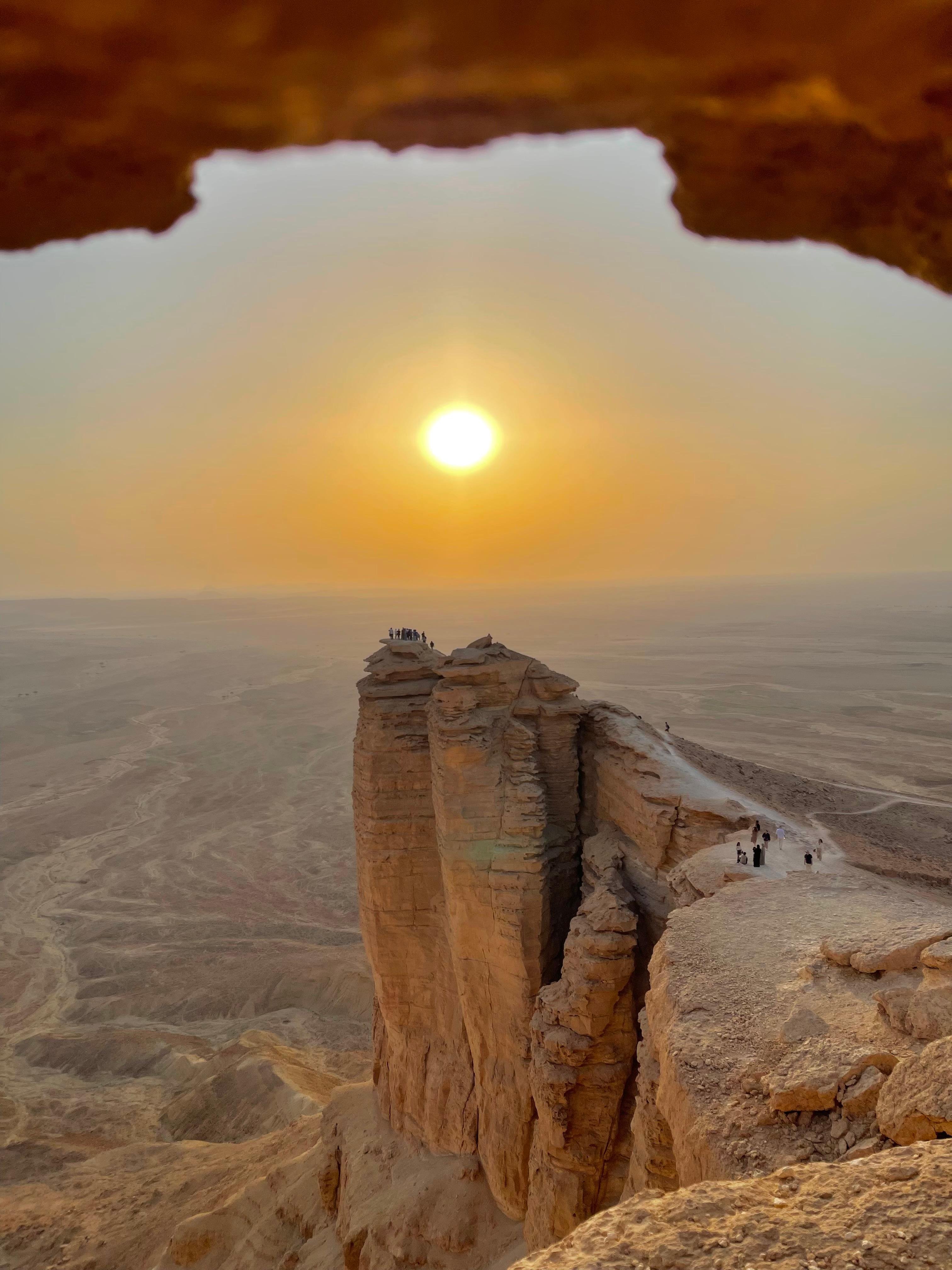
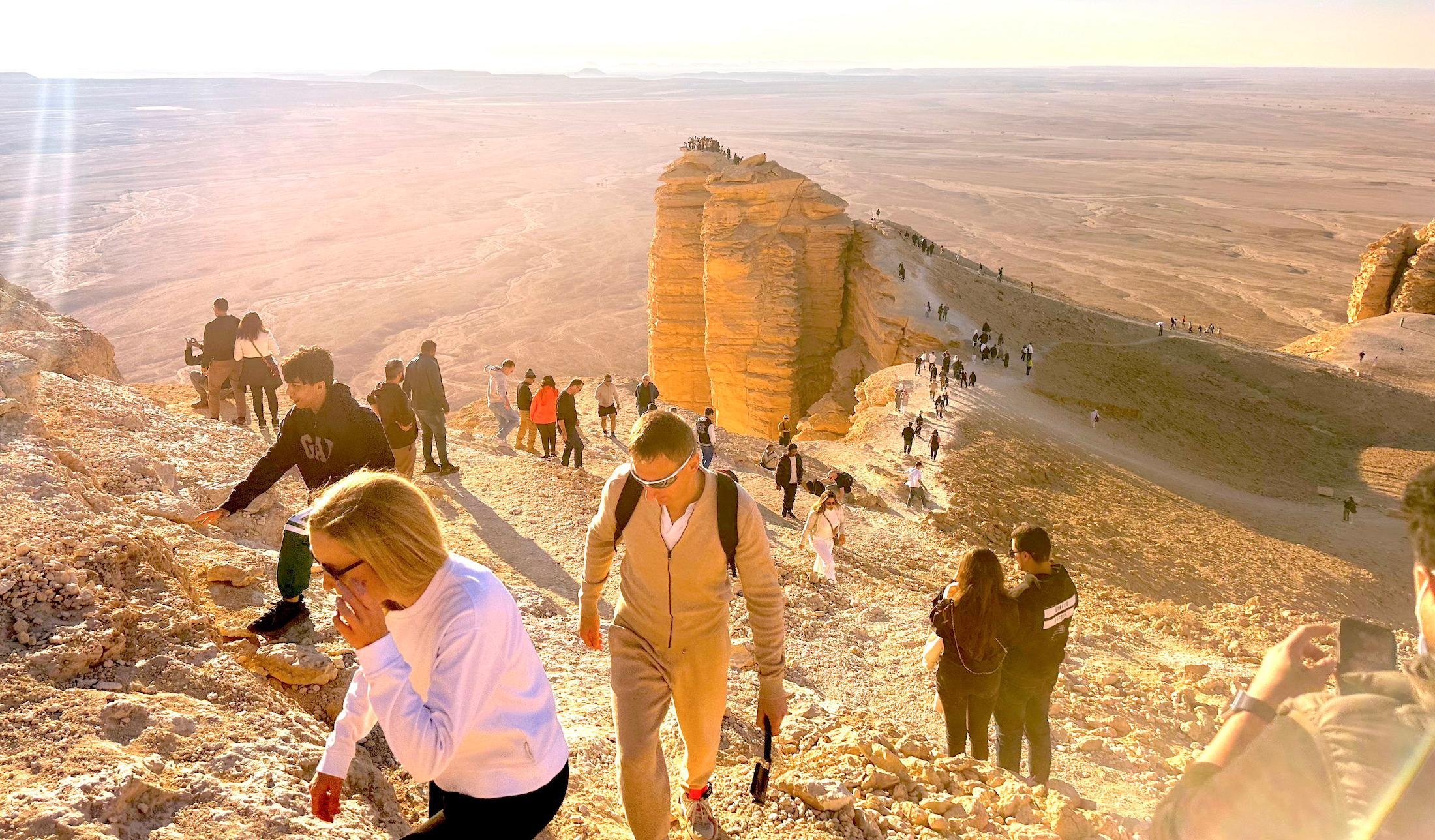
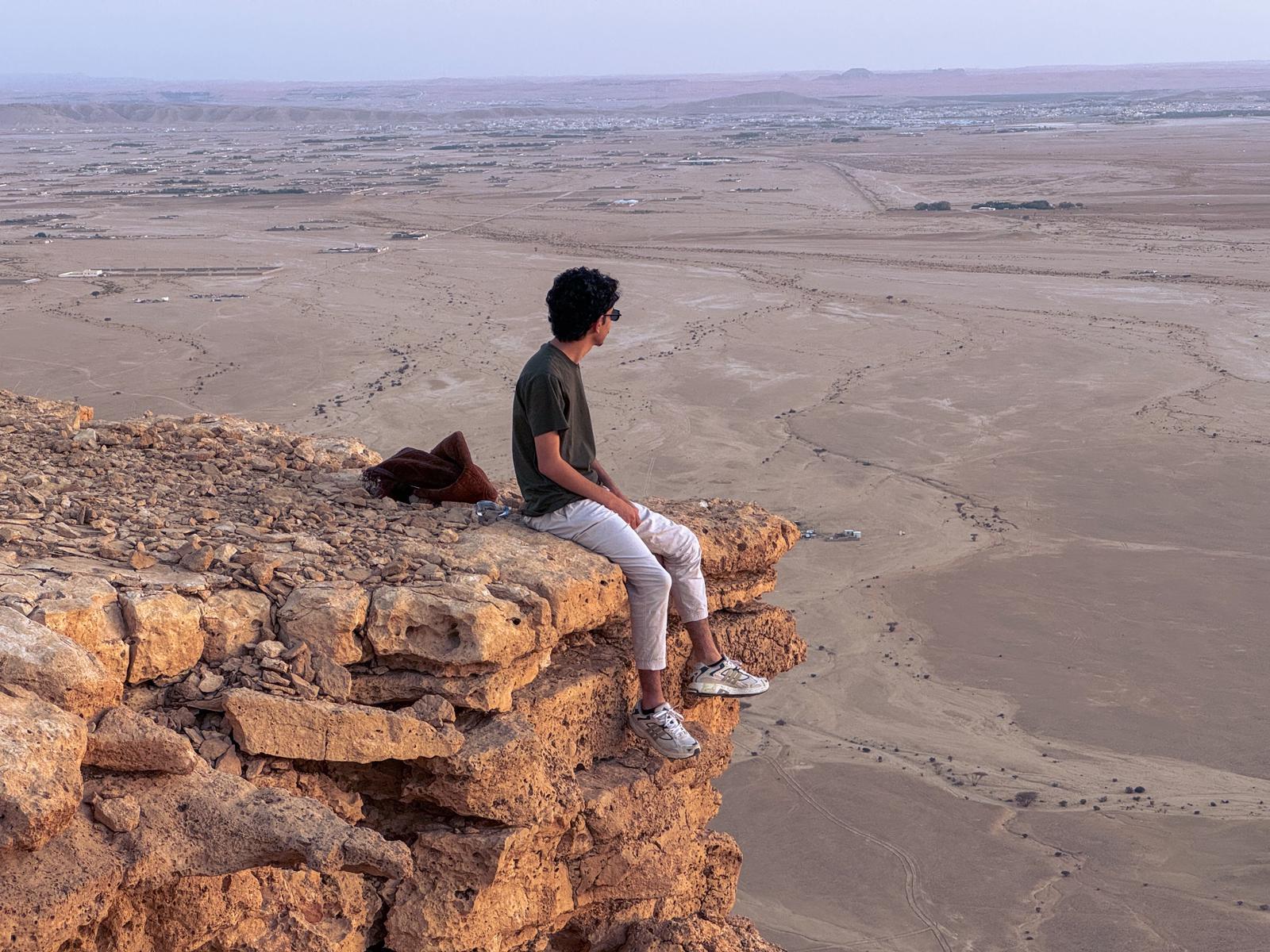
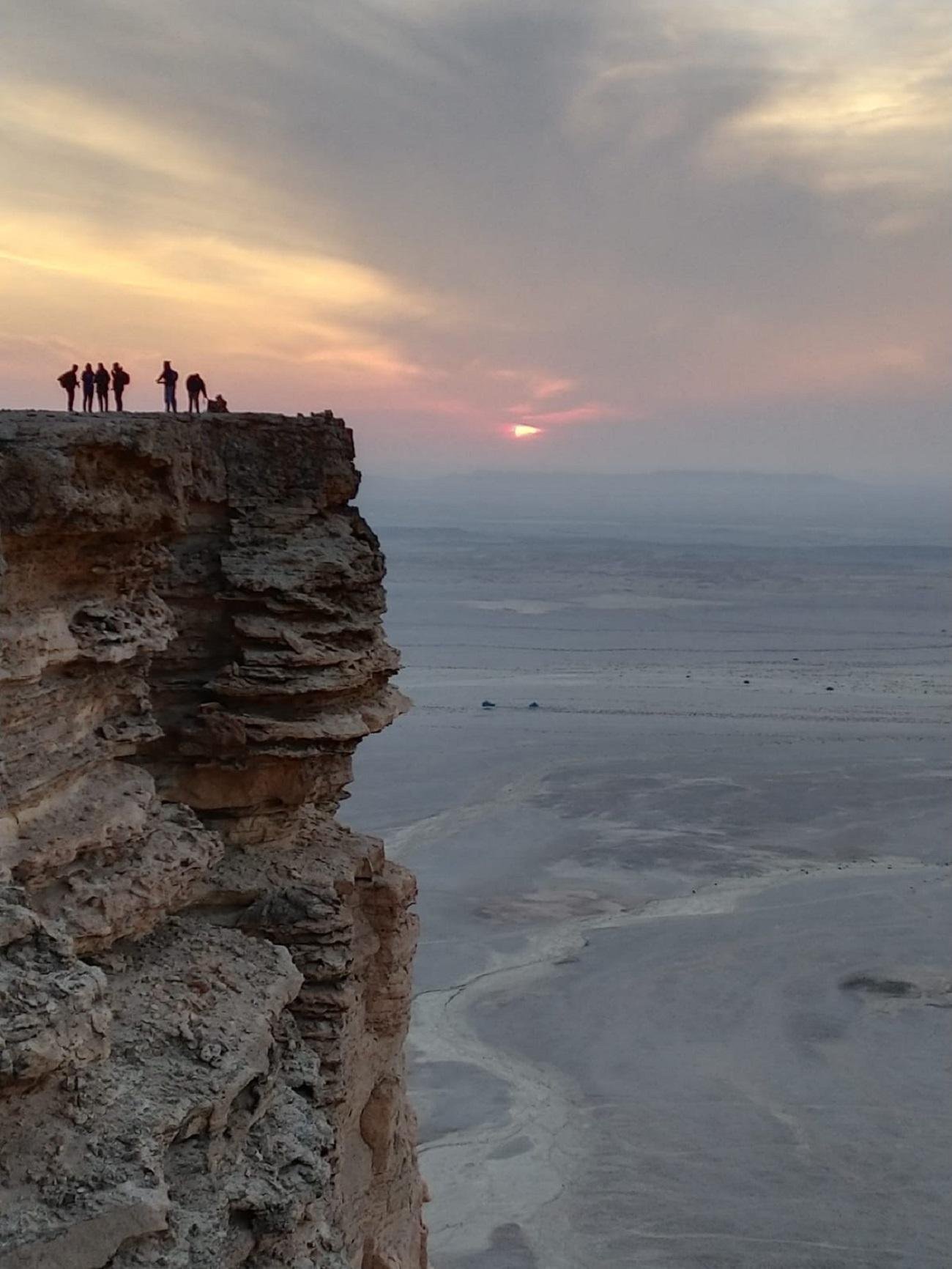
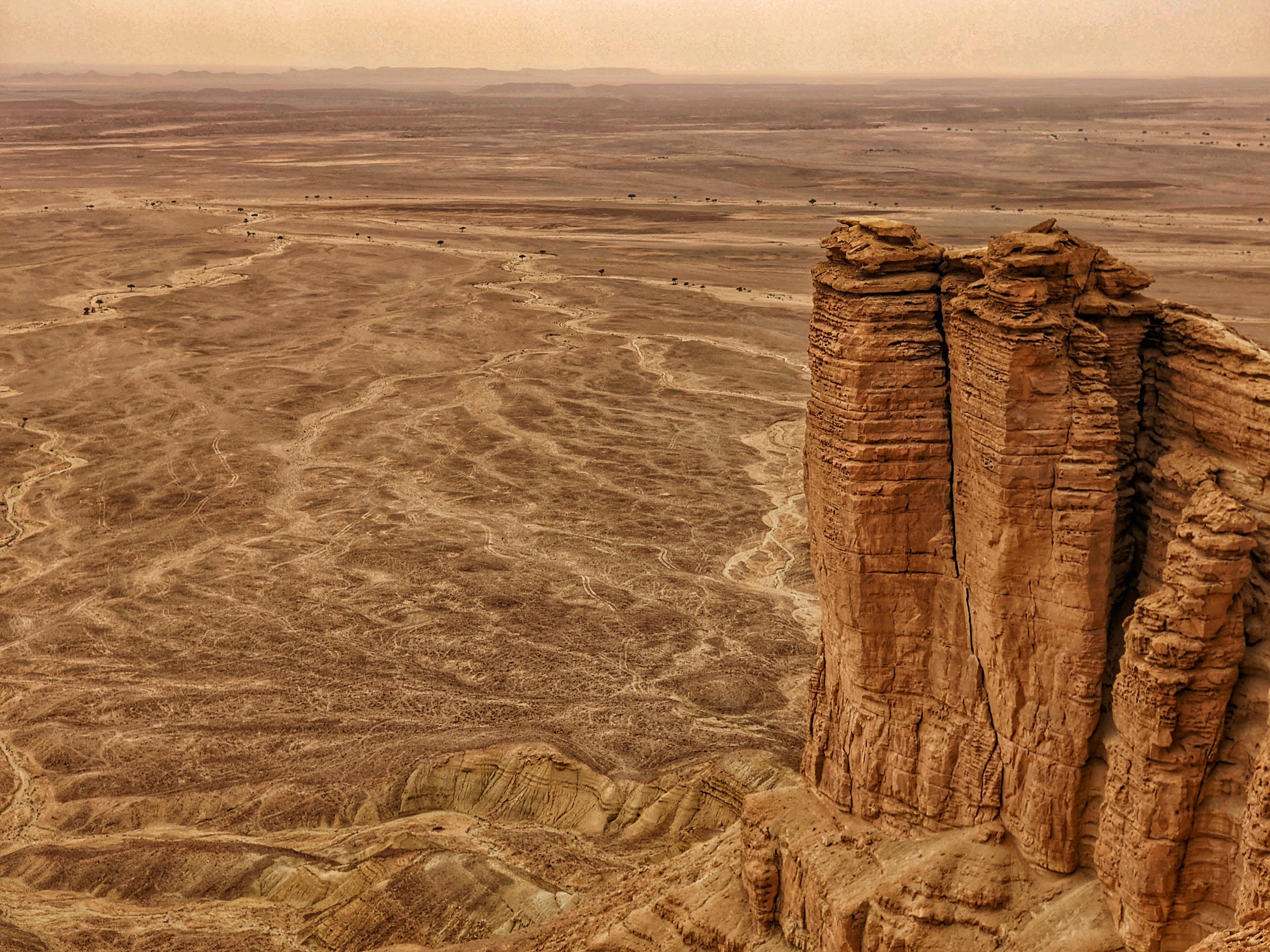
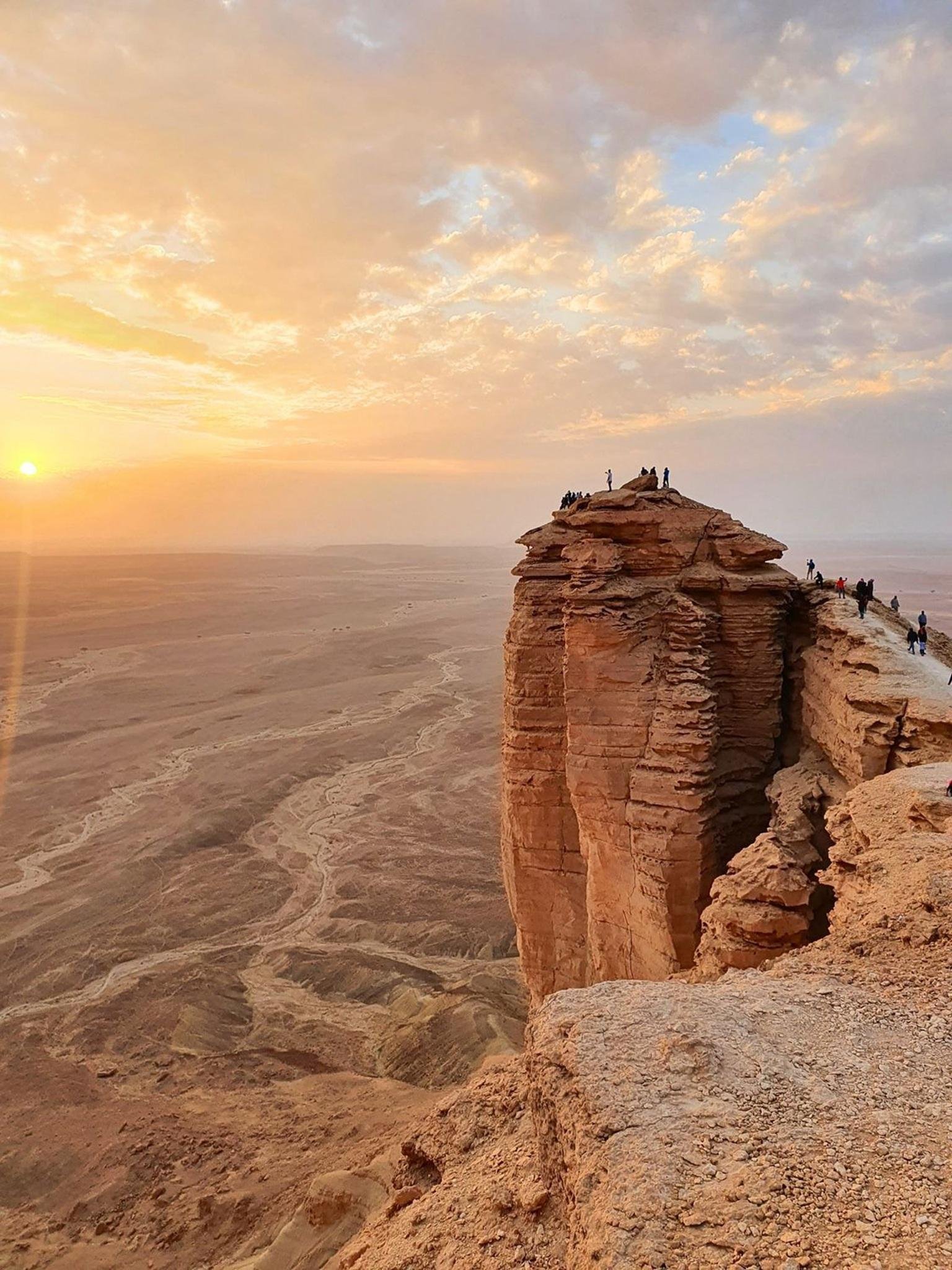
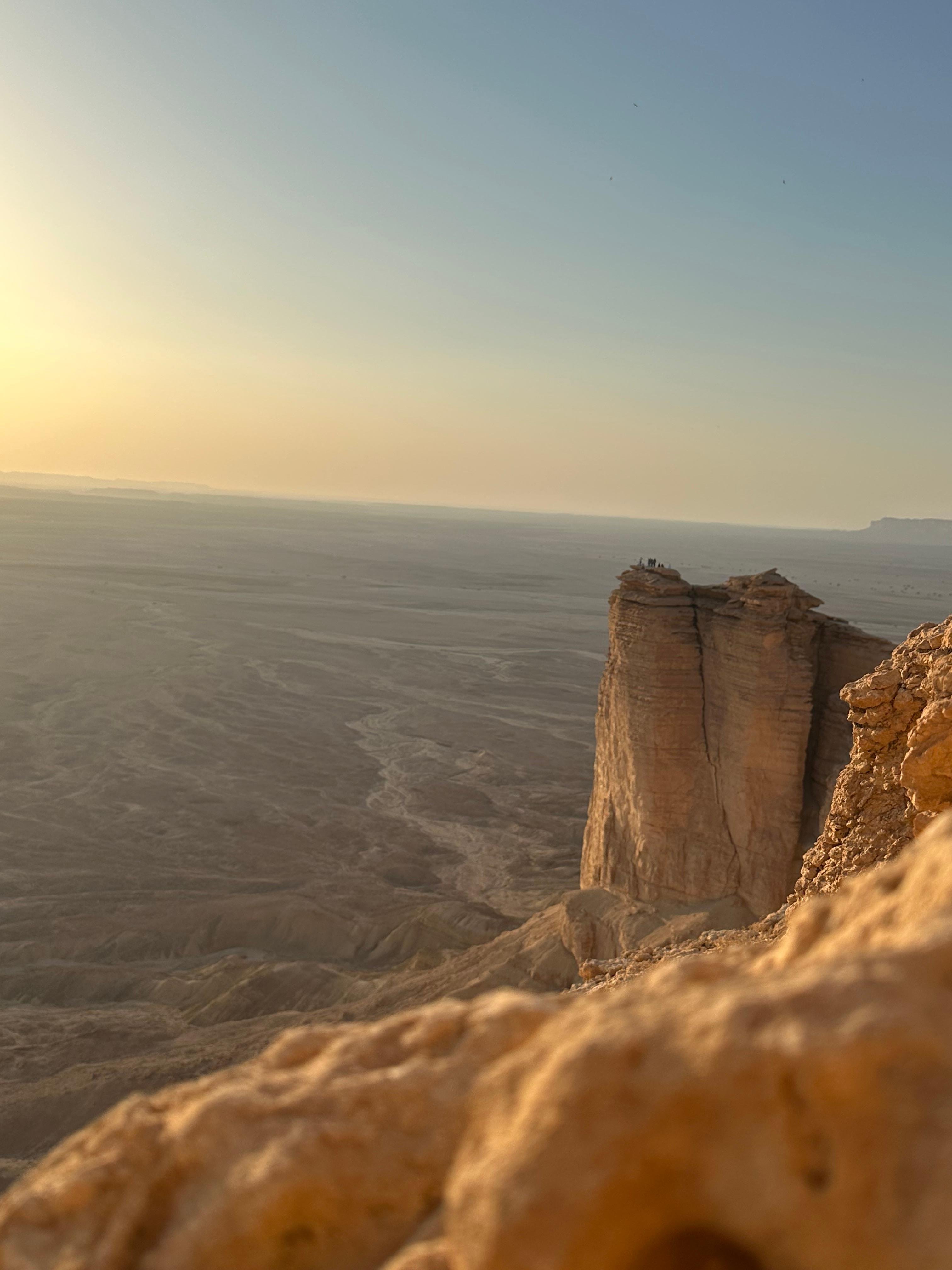
The Jebel Fihrayn cliff drops in one uninterrupted face onto a plain that runs unbroken to the horizon.
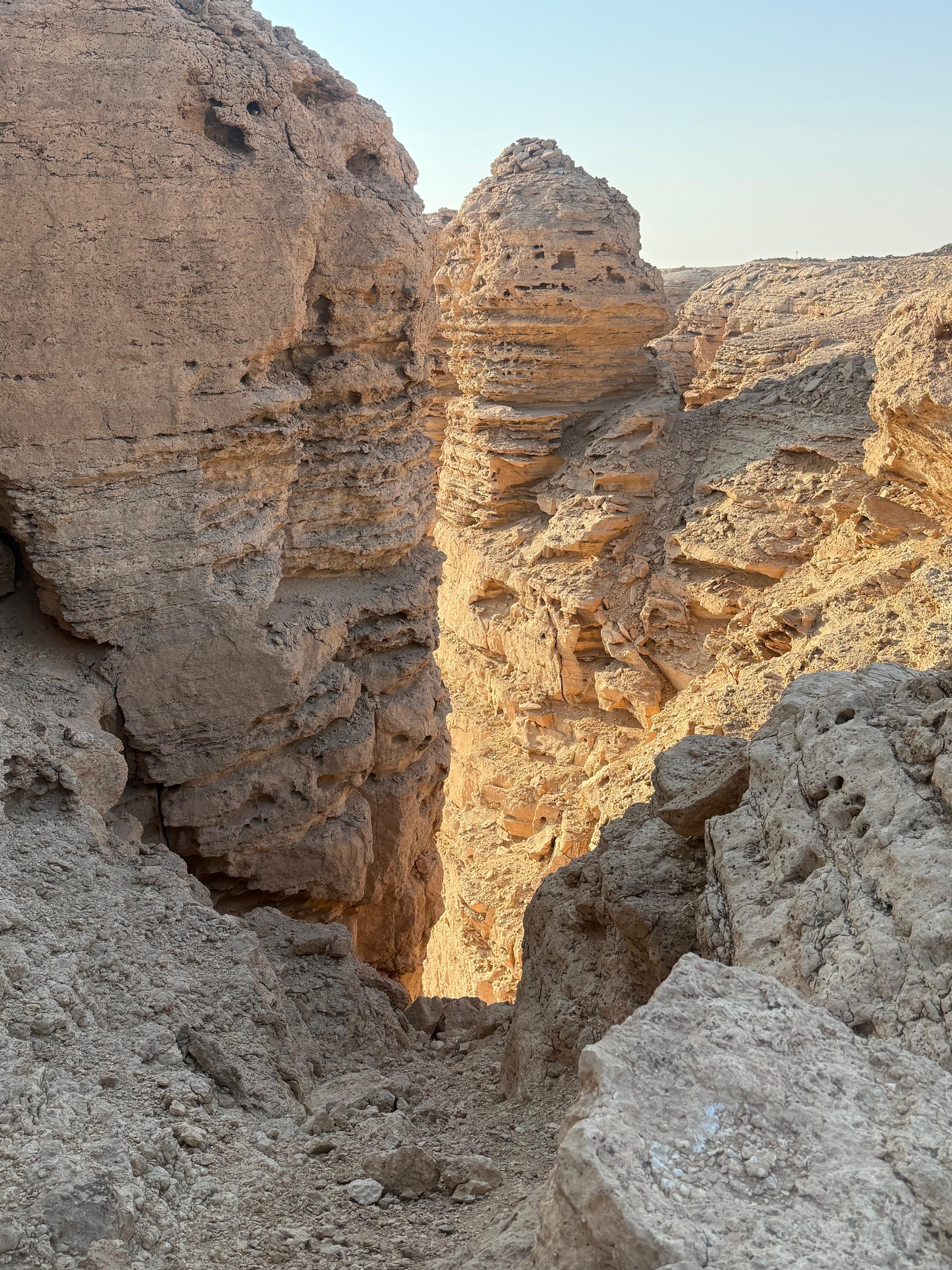
The limestone holds marine fossils from the shallow sea that once covered central Arabia, visible along the exposed ridge slopes.
With no settlement or road lighting for kilometres, the site delivers some of the clearest stargazing within reach of Riyadh.
Every route to Edge of the World ends at the same cliff, but almost nothing else about these trips is shared. They differ in how long you stand on the rim, who stands there with you, how far you walk from the drop-off, and whether the desert stays a photograph or becomes a place you sleep. Read the five options below as five different relationships with one escarpment, then pick the one matching the pace and company you actually want.
Camping
You stay after the day groups leave — dinner at camp, the escarpment dark against the stars, and first light hitting the cliff face before anyone else arrives.
Combo Tour
Pairs the raw escarpment with Diriyah's restored mudbrick quarter, so one outing covers both the empty desert horizon and dense built heritage.
Hiking
Walks along the ridgeline and down into the wadi beds below, trading the standard viewpoint for fossil-flecked rock, scrambles, and cliff faces seen from underneath.
Scenic Tour
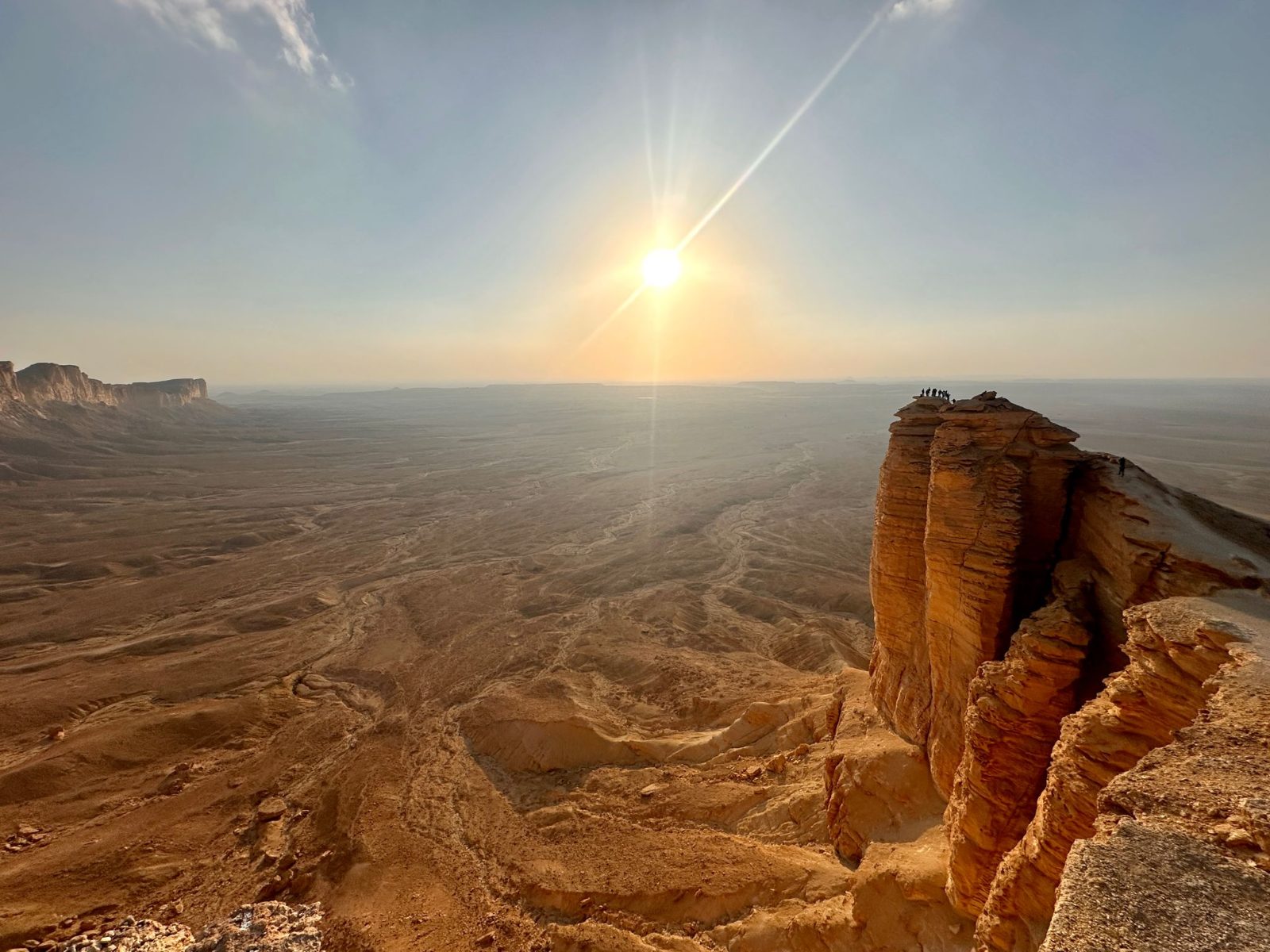
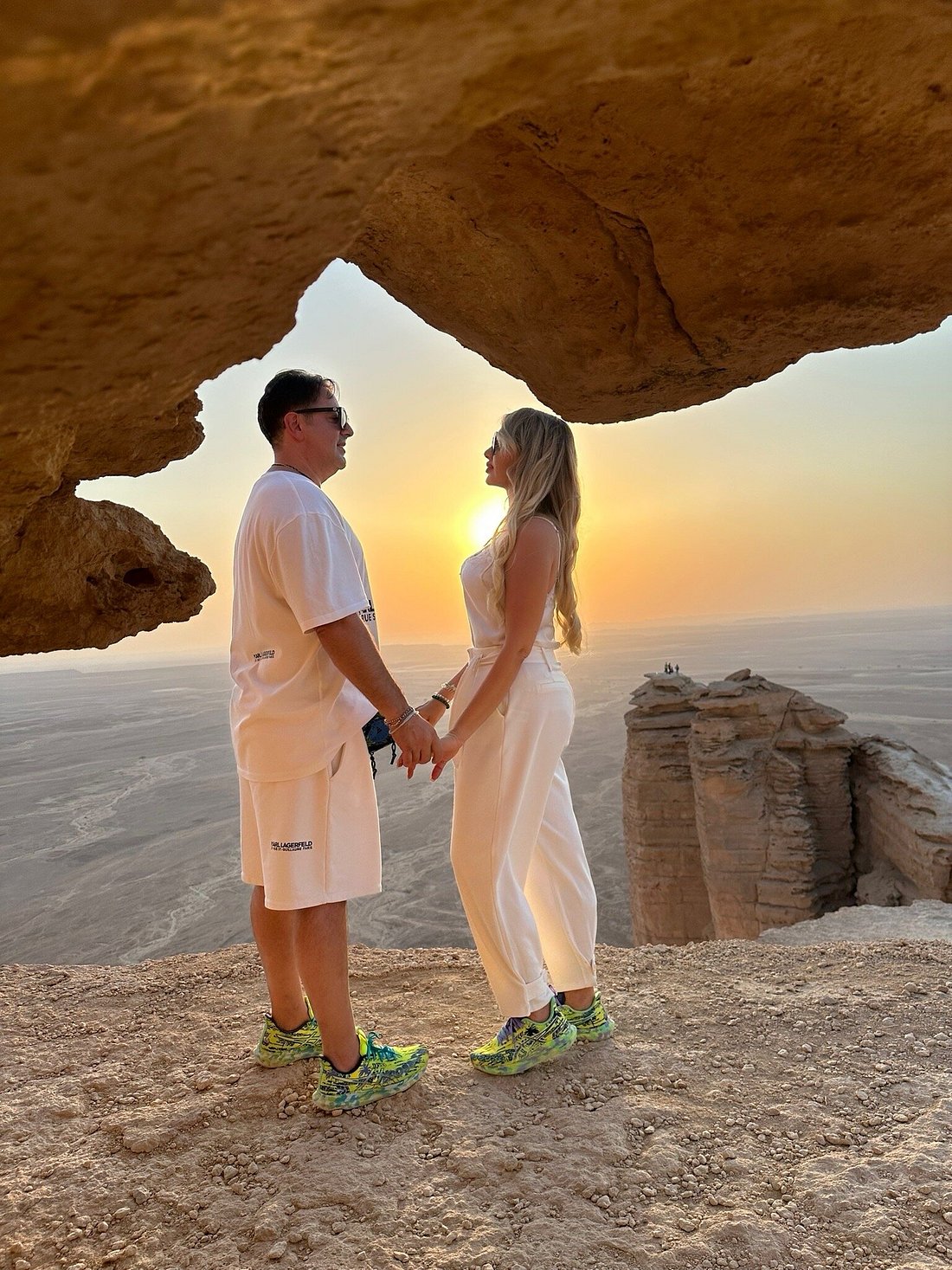
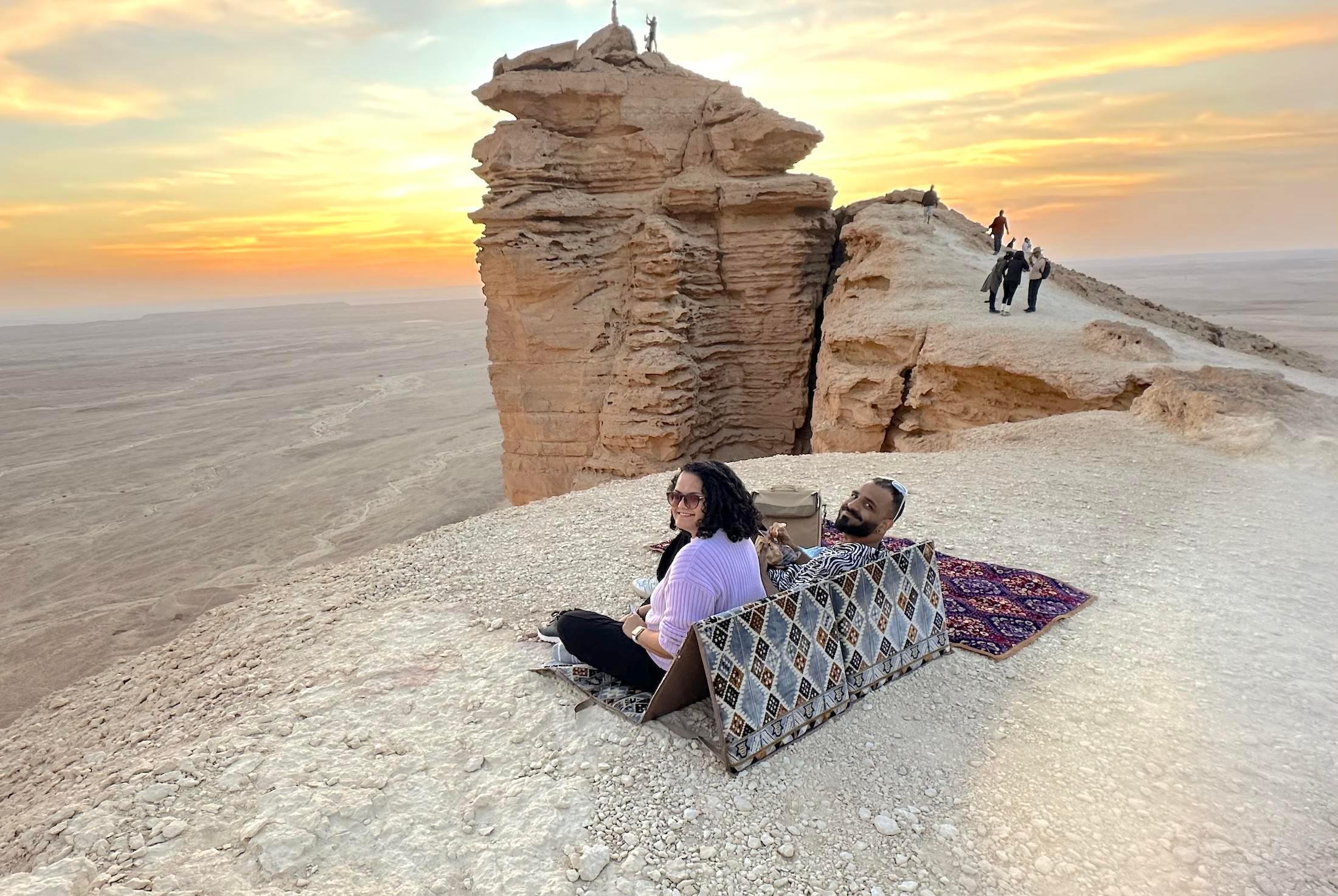
Timed so you reach the cliff edge as the escarpment shadow stretches east across the valley floor, turning the limestone from bone-white to deep amber.
Private Tour
Your own vehicle and guide, so the route bends to you — extra stops at the lower plateau, unhurried time on the rim, no waiting on a shared group.
Three plans cover the way most people actually visit the escarpment: a compact half-day built around the cliff at sunset, a longer day that puts a hike and a 4x4 run back to back, and an overnight that adds a heritage half-day before the drive out. Each plan lists stops in the order they work on the ground, so you are not doubling back across the plateau. Pick the one that matches how much time you have between arrival and departure.
Meet your vehicle in Riyadh and settle in for the ride out to the escarpment. Bring a light layer, since the cliff edge gets windy once the sun drops.
Walk the graded path to the main promontory and pick a ledge before the crowd arrives. Allow about 30 minutes to scout a spot with a clear western view.
View guideWatch the light change across the valley floor from the exposed rock shelf. Tripods hold better on the flat slabs than on loose gravel.
View guideHead back after the last colour fades, usually around 90 minutes of driving. Eat before you leave the city if you want a late dinner.
Begin on the lower escarpment trail while the rock is still cool, roughly two to three hours of walking. Carry more water than you think you need.
View guideFollow the ridge line between the two main promontories, stopping at the natural gaps in the cliff. Closed-toe shoes with grip matter here more than anything else in your bag.
View guideRest in the shade at the vehicle staging area and refuel before the driving leg. Budget about 45 minutes so you are not eating in the car.
Drop off the escarpment and cover the sand and gravel tracks below the cliffs with a driver who knows the route. Stow loose gear before you set off.
View guideArrive with daylight left, claim a tent position away from the drop, and get your bearings. Torches and a spare battery pack are worth packing.
View guideEat at camp, then walk a short distance from the fire to let your eyes adjust. Give it 20 minutes before judging the stars.
View guideCatch first light from the same ledge that draws the evening crowd, then break camp. Roll up bedding early so you are not doing it in the heat.
View guideFold in a mudbrick heritage stop on the way back rather than making a separate trip. Wear something you can walk narrow lanes in for a couple of hours.
View guideEdge of the World has no public transport link, so every visitor arrives by private vehicle. The trip is straightforward to plan but not to self-navigate, which is why most travelers let a driver or tour operator handle the final stretch.
A taxi or Uber/Careem can get you from central Riyadh to Al Uyaynah, the staging point where paved roads end, but few standard sedans continue past that turnoff. Most drivers will not attempt the off-road section, so this option only covers part of the journey.
Operator 4x4 vehicles collect guests from Riyadh hotels and handle the roughly two-hour drive, including the unpaved final stretch of gravel, sand, and rock. This is how the large majority of visitors reach the site, since the route has no signage and is easy to lose even with GPS.
Renting a 4x4 lets you set your own schedule, but the last 20 to 40 kilometers cross unmarked desert track where a wrong turn can add hours or strand a low-clearance vehicle. Offline maps such as Maps.me are commonly recommended since cell signal drops out before the escarpment.
Once parked at the clifftop, the site itself is walked on foot along the escarpment edge, with no vehicle access beyond the designated parking area. There are no paved paths or railings, so footing needs care near the drop.
From the airport: From King Khalid International Airport, most visitors take a taxi or private transfer into Riyadh first, since Edge of the World tours depart from the city rather than the airport; the site itself sits roughly two hours further out over paved and then unpaved road, well beyond normal airport-transfer range.
October through April is the window that works, when daytime temperatures settle into the mid-teens to mid-20s Celsius and the cliff-edge walk stays safe rather than punishing; within that stretch, plan arrivals for dawn or the two hours before sunset rather than midday.
This is the core season, with December-February sometimes bringing brief post-rain desert blooms along the escarpment.
The Saudi Cup at King Abdulaziz Racetrack in Riyadh pulls winter travelers into the region, so book cliff-edge tours ahead if visiting this month.
Heatstroke and dehydration risk make the unshaded clifftop genuinely hazardous in these months, and daytime hiking between viewpoints becomes impractical.
Midday sun flattens the valley view and raises heat exposure, while dawn or late-afternoon light picks out the escarpment's layered rock in sharper relief.
For visitors with a full day, the Edge of the World combines naturally with sites back toward Riyadh rather than standing alone as a single-stop excursion.
A UNESCO World Heritage site built from mud brick, At-Turaif is the ancestral home of the Saudi royal family and pairs well with an Edge of the World outing since both sit on the Riyadh side of a day loop.
A newer entertainment and cultural development outside Riyadh, useful as a secondary stop for travelers wanting a contrast to desert scenery and heritage architecture on the same day.
Operators bundle the escarpment viewpoint with a stop in Diriyah so guests see both mud-brick heritage and open desert without arranging two separate trips; check the combo-tours page for how these are structured.
The main cliff-edge photo stop draws every visitor, but the surrounding stretch of the Tuwaiq escarpment holds a handful of quieter detours worth folding into the day.
Tour operators call it the Mystery Bat Cave: a roughly 120-meter passage through mineral concretions, home to a resident bat colony, reached via a short detour off the Sadus route.
An alternate cliff section reached by driving through Dhurma rather than the standard Sadus turn, with its own run of edges and far fewer vehicles parked along the rim.
A quiet stretch near the dam wall, with standing water after winter rain and short walking paths that most groups skip on their way to the main lookout.
Beyond the acacia grove itself, the approach track passes small camel and goat herds and informal Bedouin camps tucked among the thorn trees.
A separate southern viewpoint reached by local guides, with a short walk past exposed marine fossils from the escarpment's seabed past.
The cliff face is older than any human story told beneath it. Roughly 150 million years ago, during the Jurassic, this ground lay beneath a shallow tropical sea. Lime mud settled. Shells settled. Compression turned both to the pale limestone that now forms the Tuwaiq Escarpment, a 600-kilometre arc curving through central Arabia. Fossil bivalves and ammonites remain visible in the rock, which is why Jabal Fihrayn tours often begin with a hand on the stone rather than a look at the view. Uplift came later, as Arabia separated from Africa and the Red Sea opened. Erosion carved the escarpment into a wall standing some 300 metres above the Najd plain. Caravans read that wall as a map. From the first millennium BCE, incense moving north from Yemen along the frankincense routes used the Tuwaiq's springs and wadi gaps, and later Darb Zubaydah traffic — formalised under the Abbasids around 800 CE — crossed the same corridor toward Mecca. The escarpment was a landmark before it was a destination, and Edge of the World Tours retrace those bearings. Much of that inheritance is legible today. Riyadh landmarks such as Diriyah were built from the same limestone, quarried and mixed with mud. Bedouin herding tracks still thread the wadi floors below the cliff. Guides on Edge of the World Tours tours point out camel paths, abandoned wells and the layered horizons of the seabed itself. Visitors booking Edge of the World Tours tickets stand on a fossil reef. A well-run Edge of the World Tours tour makes that visible: sediment, uplift, caravan, and the plain beyond, unbroken to the horizon.
Shallow Jurassic sea deposits the limestone that later forms the Tuwaiq Escarpment.
Tectonic uplift accompanying the Red Sea rift raises the plateau above the Najd plain.
Incense caravans from southern Arabia begin using wadi gaps and springs along the Tuwaiq corridor.
The Abbasid pilgrim road Darb Zubaydah is formalised, running near the escarpment toward Mecca.
Diriyah rises from Tuwaiq limestone and mud brick as the first Saudi state's capital.
Off-road access from Riyadh popularises the site under the name Edge of the World.
Guided visits remain the standard means of reaching the cliff, with fossil-bearing rock a core part of the interpretation.
Everything you need to know about visiting Edge of the World Tours
The Edge of the World, or Jebel Fihrayn, is famous for its dramatic escarpment cliffs rising roughly 300 meters above the Najd plateau, part of the 800-kilometer Tuwaiq mountain range northwest of Riyadh. The site was long a landmark along ancient desert caravan routes, and today it draws travelers for sweeping horizon views, sunset photography, and the sense of standing at the literal edge of a vast plateau. Many Edge of the World Tours also stop at nearby formations like Elephant Rock along the way.
A half-day slot of around 5 to 8 hours covers the round trip from Riyadh, the hike to the clifftop, and time for photos, which is how most Edge of the World Tours are structured. Travelers wanting a fuller experience, including a bat cave detour, sunset dinner, and stargazing, should plan for the longer end of that window rather than trying to rush it into an hour or two. One dedicated outing is enough; it is not a multi-day destination on its own.
The cooler months from October through March are the recommended window, when daytime temperatures stay comfortable for the clifftop hike and the visibility across the plateau is at its best. Summer visits, roughly May through September, involve extreme heat that makes exposed hiking risky, so operators generally schedule departures for early morning or mid-afternoon regardless of season. This overview is intentionally brief since seasonal detail is covered elsewhere in this guide.
The escarpment sits about 90 minutes northwest of central Riyadh by road, with the final stretch running over rough, partly unpaved desert tracks that require a 4x4 vehicle. Most visitors join organized transport rather than self-driving, since sedans cannot reliably handle the last few kilometers. Full transfer logistics are covered in the dedicated getting-around section of this guide.
Group Edge of the World Tours from Riyadh are a relatively affordable way to see the site, with typical group rates around 300 SAR per person, while private tours and packages that add dinner, a bat cave visit, or stargazing cost more depending on inclusions and group size. Compared to other Saudi excursions, this makes it one of the more accessible things to do in Edge of the World for budget-conscious travelers. Exact per-tour pricing and what each package includes is covered in the tour listings elsewhere on this page.
Independent visits are possible but not advisable without off-road experience, since the approach roads are rough, mobile signal is patchy, and there is no shade or services near the cliff edge. Going with a licensed guide or driver is the standard recommendation, particularly for first-time visitors or anyone unfamiliar with desert driving. Guided Edge of the World Tours also provide context on the escarpment's geology and history that a solo visit would miss.
Bring sturdy closed-toe hiking shoes, a hat, sunglasses, sunscreen, and more water than you think you need, since there are no shops or facilities at the site itself. A light jacket is worth packing for cooler months, as desert evenings can turn chilly once the sun sets. Loose, breathable clothing works best for the exposed clifftop walk regardless of season.
Families do visit, but the site suits older children who can manage an uneven, exposed hike with sheer drop-offs and no guardrails, so close supervision is essential near the cliff edge. Private Edge of the World Tours give families more flexibility to set their own pace than a larger group departure would. Bringing extra water and sun protection matters even more for younger visitors on the desert walk.
Several travelers combine an Edge of the World outing with other Riyadh-area excursions on the same trip, since the region offers a mix of heritage sites and desert landscapes within a similar driving radius. This guide's dedicated day-trip section lays out which combinations work best logistically. Pairing options let you build a fuller itinerary around the same 4x4-friendly route.
Booking a day or two ahead is generally sufficient for group departures, though private tours, sunset dinner add-ons, and weekend dates can fill up faster and benefit from earlier reservation. During the peak October-to-March season, popular operators sometimes sell out on short notice, so booking Edge of the World Tours a few days in advance is a reasonable precaution. Confirming pickup time and location directly with the operator avoids confusion, since afternoon and sunrise departures both run depending on the package.
Choose from amazing attractions and create unforgettable memories in this beautiful city
View All Attractions