
7 hr
Riyadh 4x4 Desert Expedition: Edge of the World & Stargazing
- Expert local guide
- Small group
- Skip-the-line access
- Free cancellation
Edge Of The World And Diriyah Tour — Cliff Rim & Mud-Brick Capital
Limestone falls away to nothing, and history rises in clay.
Compare fares, pick the fit — all bookings are mobile-voucher and eligible for free cancellation where shown.
7 hr
6 hr 30 min
7 hr
Hand-picked experiences loved by thousands of travelers
6 hours
Free Cancellation
Traverse the dramatic desert cliffs, visit a gazelle sanctuary, and enjoy a traditional picnic during this 6-hour excursion.
3 hours
Free Cancellation
Explore the majestic Tuwaiq Mountains on this 3-hour guided desert trek into Riyadh's ancient history.
4 hours
Free Cancellation
Experience the Tuwaiq Mountains on this private tour featuring ancient trails and breathtaking plateau views.
Drive northwest via Highway 50 toward Huraymila, transitioning to unpaved desert tracks near the escarpment
Park at a pull-off area and walk to the cliff edge on foot across gravel and rock
Walk along the rim to viewpoints, take photographs, and take in the drop into the desert basin below
Settle at a chosen viewpoint for golden-hour light around the 15:00–18:00 window before dusk
Drive back via Diriyah for an evening stroll through At-Turaif or Bujairi Terrace to round out the edge of the world and Diriyah tour
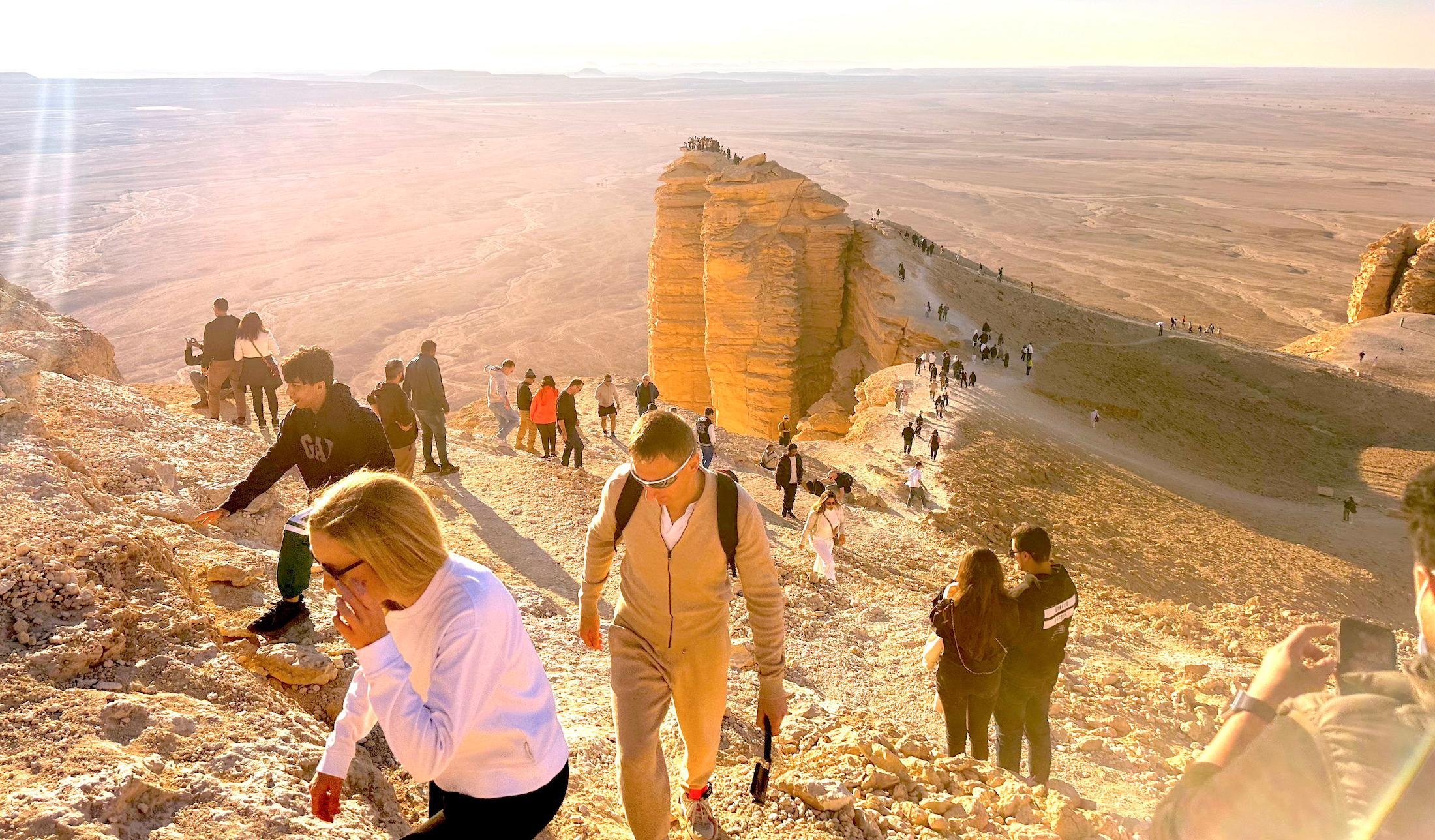
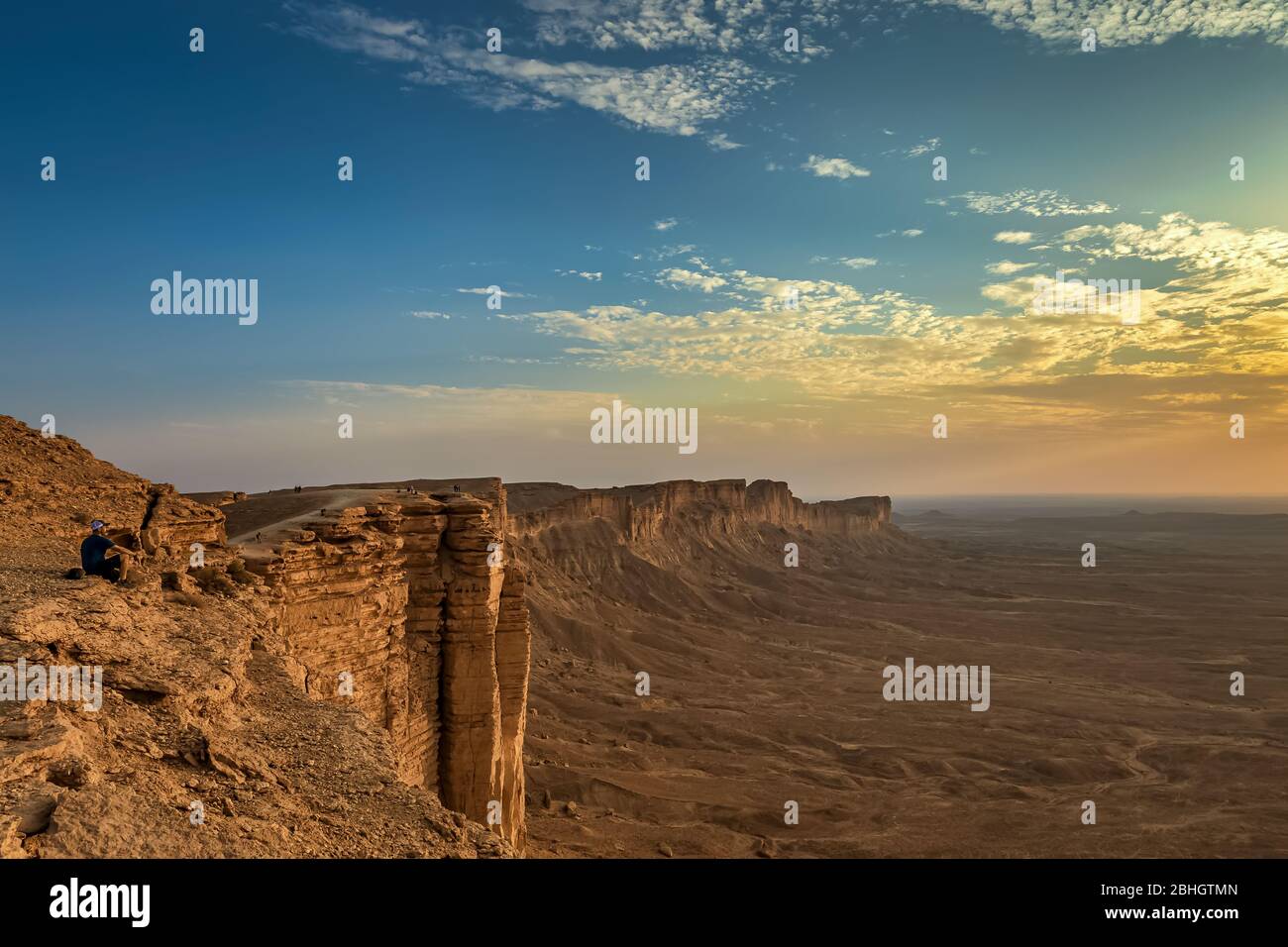
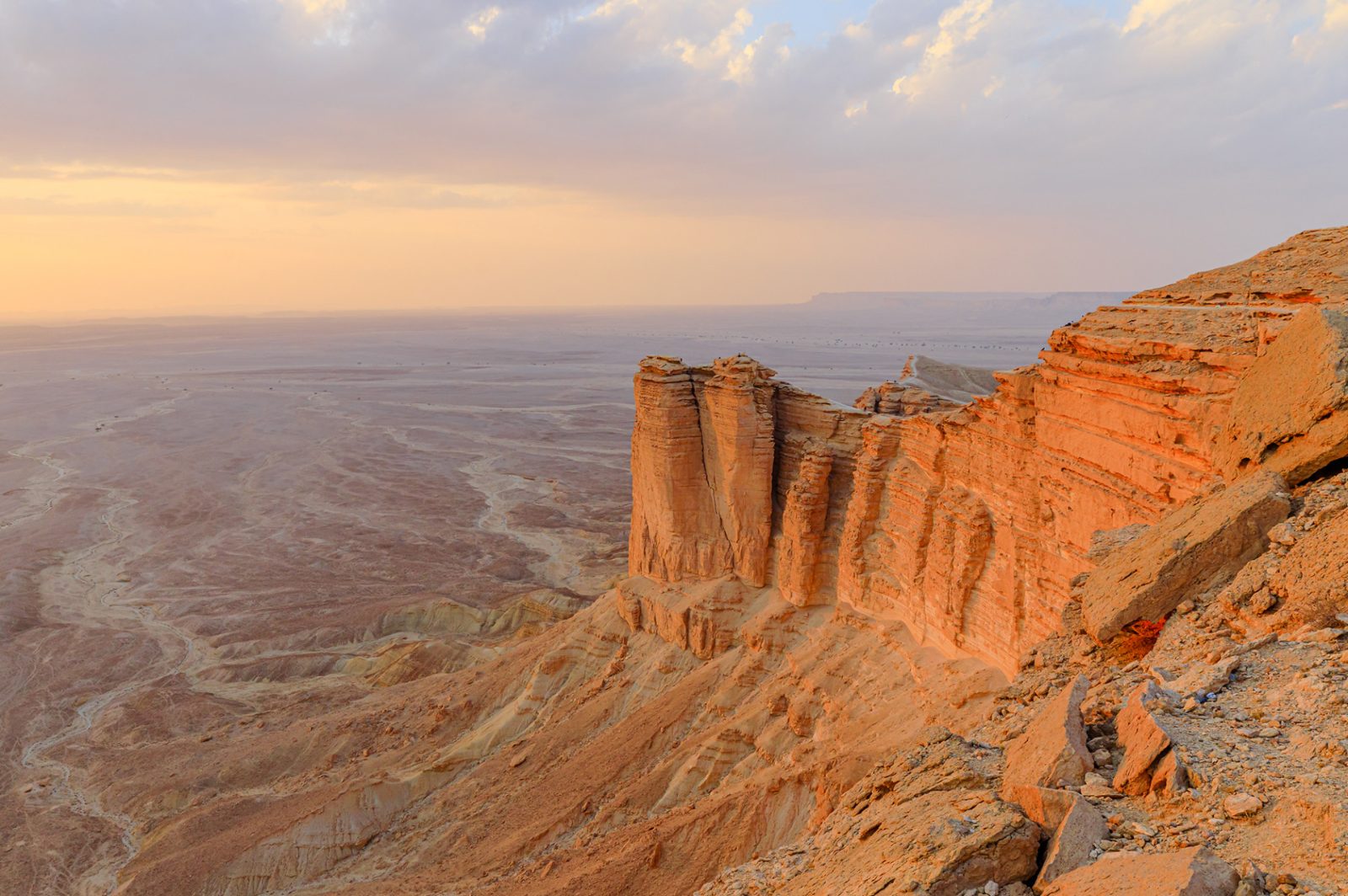
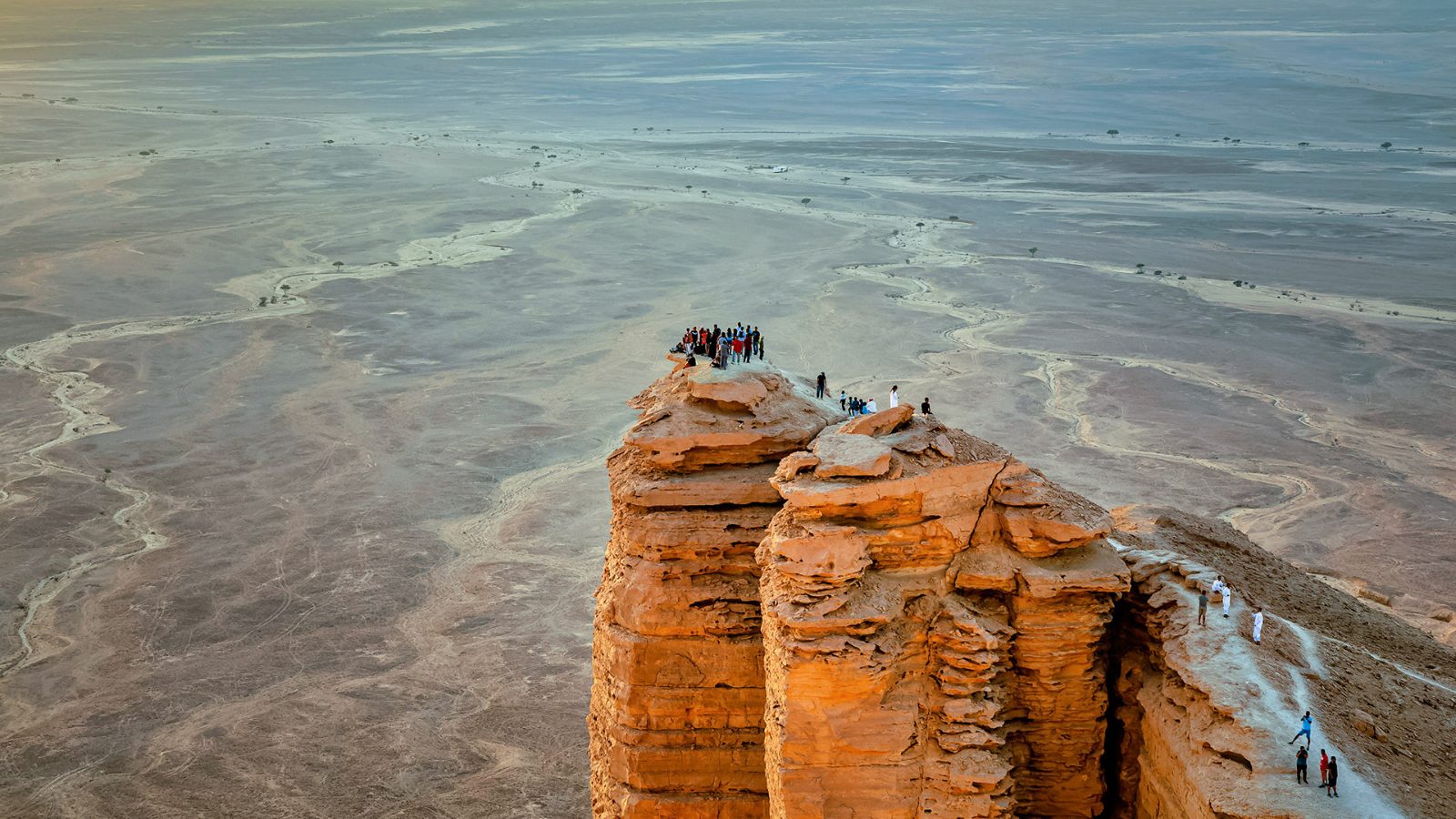
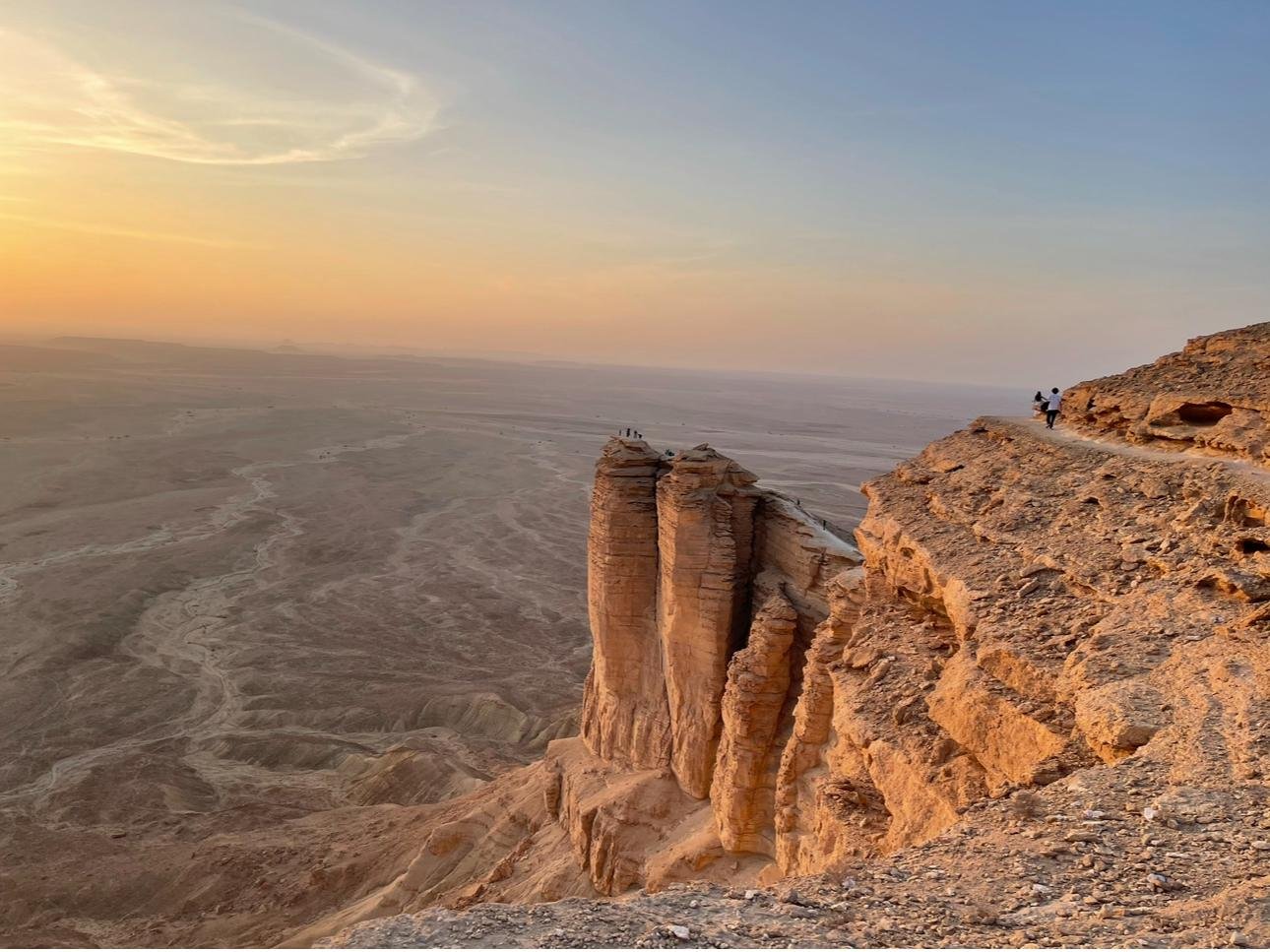
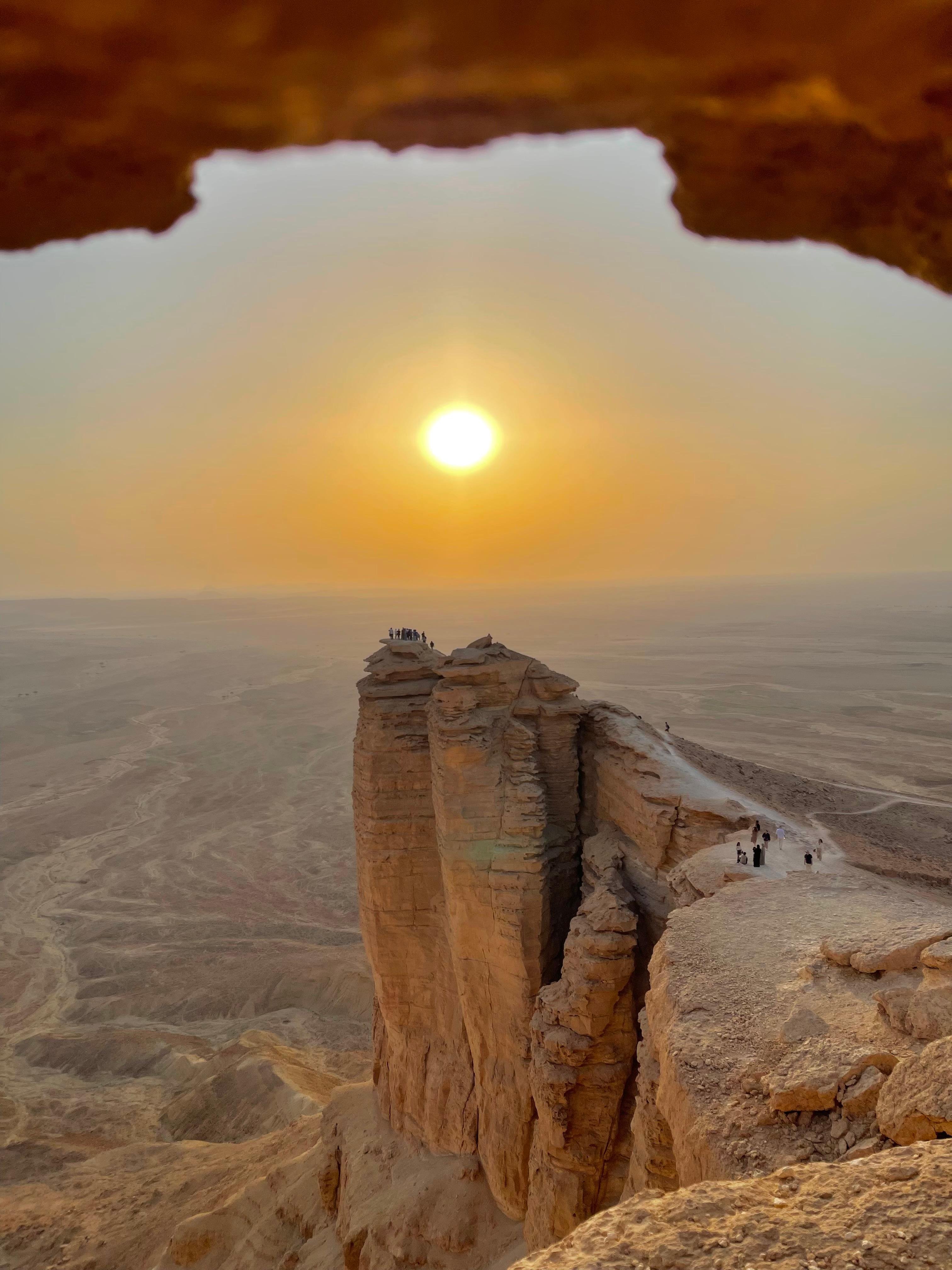
The principal viewpoint where the Tuwaiq Escarpment drops away in a near-vertical face, giving unobstructed views across a desert basin that stretches roughly 100 kilometers to the horizon. Wind speeds here noticeably intensify in the final hour before sunset, a detail many first-time visitors underestimate.
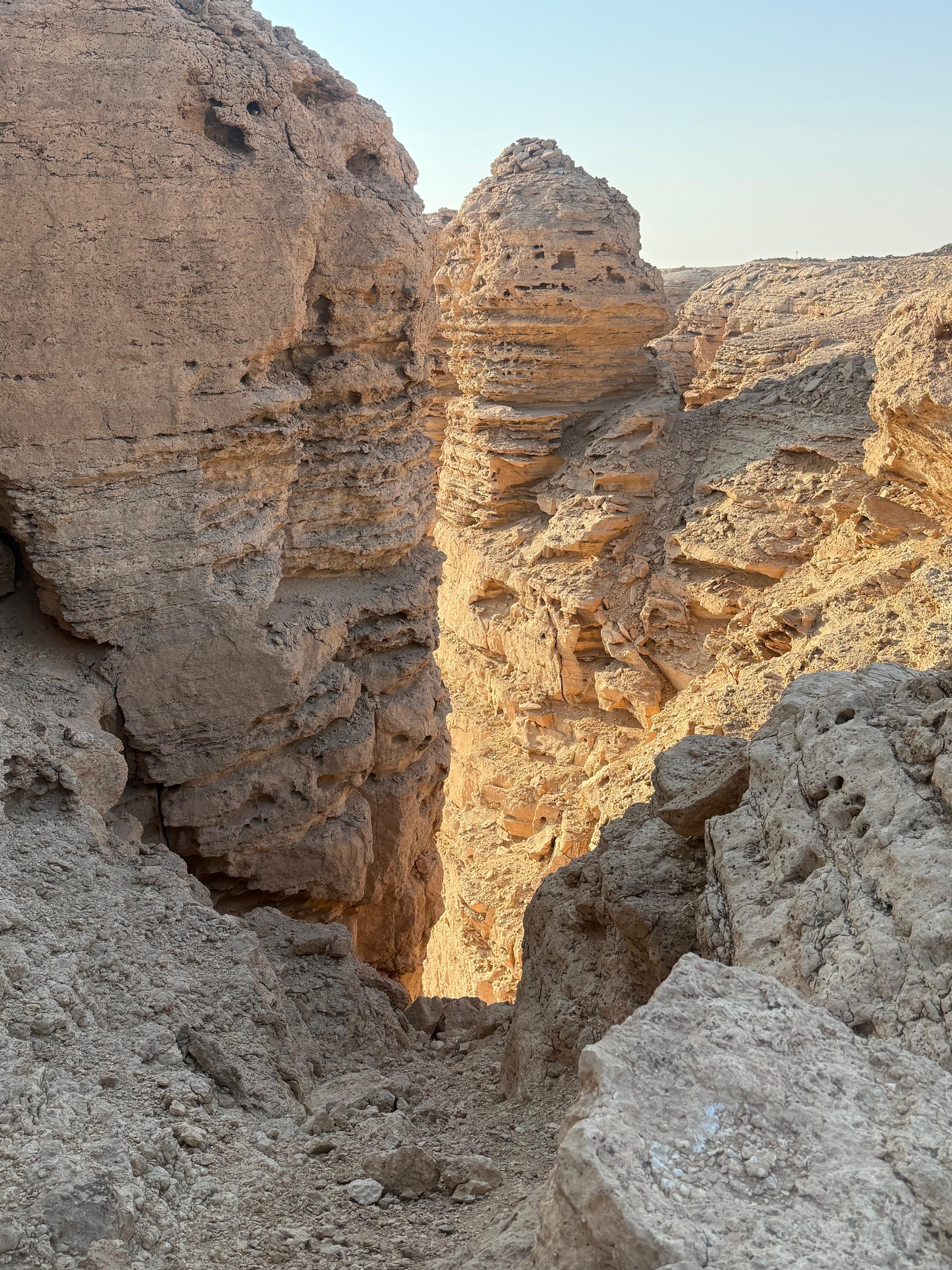
A rugged, unmarked rim path running along the plateau edge that lets visitors reach quieter viewpoints away from the main pull-off area. The exposed limestone rock along this stretch formed over millions of years as ancient seabeds were uplifted into the current plateau.
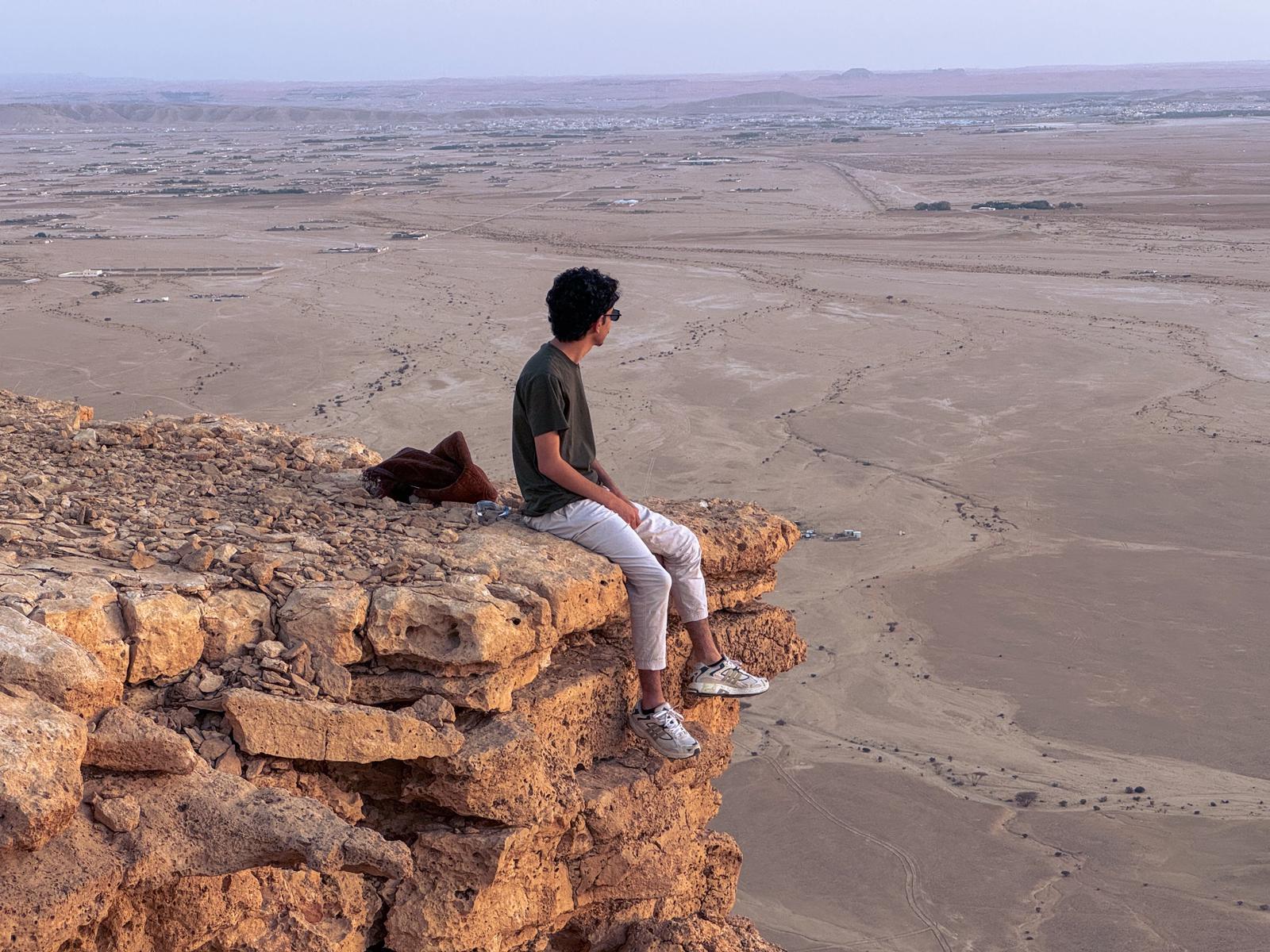
The vast lowland stretching beneath the escarpment, visible in full from the cliff edge, showing scattered rock formations and dry wadis carved over geologic time. On clear days visibility across the basin can exceed 50 kilometers.
A ridge segment favored for sunset viewing where the escarpment's stone face catches warm light, turning shades of orange and red in the final 30 minutes before dusk. Photographers often set up here specifically for the 17:30–18:00 light change.
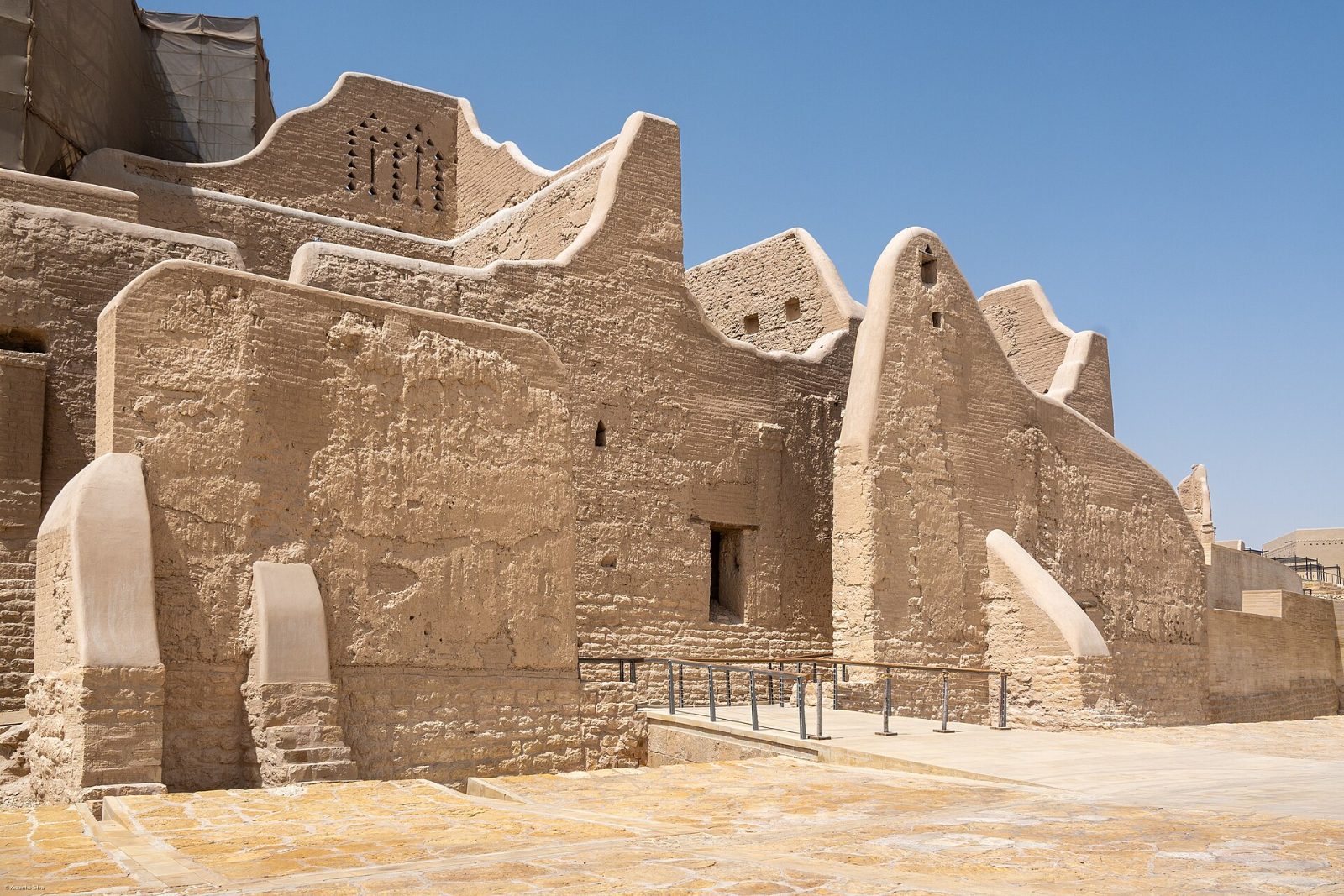
The historic mud-brick village travelers pass through en route to the escarpment, offering a glimpse of older Najdi settlement architecture predating the modern city of Riyadh. Several original wells and stone structures remain visible near the village outskirts.
You leave Riyadh in the early afternoon and watch the city thin into gravel plain. The last 20 kilometres are unpaved; your driver drops tyre pressure and the track begins to climb. Most edge of the world and diriyah tour tours plan the approach for the 15:00–18:00 window, when temperatures ease and the light turns gold ahead of sunset. You step out at the plateau. The ground is loose shale and it crunches. You walk maybe 200 metres toward the promontory, and then the earth simply stops — a clean drop, no railing, the wadi floor spread out below like a dry riverbed seen from an aircraft. You sit near the lip. You do not stand on it. Wind comes up the face and pulls at your sleeves. Later you take the road back toward Diriyah. You enter At-Turaif on foot as the mud walls go copper, then rust. You trace an alley barely two metres wide, run a palm across ochre plaster still bearing the print of the hand that laid it, and climb to a rooftop terrace facing the palm groves of Wadi Hanifah. The full edge of the world and diriyah tour ends here, in lamplight against clay, with the escarpment still in your legs. You will feel the shale in your shoes for days.
All the details about your upcoming adventure in one place
An edge of the world and diriyah tour pairs the sheer limestone cliffs of Jebel Fihrayn, part of the Tuwaiq Escarpment northwest of Riyadh, with the mudbrick Najdi architecture of At-Turaif, a UNESCO World Heritage Site and the founding seat of the first Saudi state. Most edge of the world and diriyah tour tours travel by 4x4 across desert track to reach the escarpment viewpoint, then return via Wadi Hanifah to walk the restored alleys of the old capital. Booking a Riyadh landmarks tour this way covers two very different sides of the region in a single outing.
The cliff that gives Jebel Fihrayn its English name was once seabed. The limestone of the Tuwaiq Escarpment formed in the Jurassic, when shallow tropical water covered central Arabia; the fossilised shells still pressed into the rock face sit roughly 300 metres above the plain today. Erosion did the rest, cutting a rim that ends abruptly and reveals an ancient caravan corridor running west toward the Red Sea. Diriyah supplies the human half of the equation. At-Turaif, the mud-brick district on the western bank of Wadi Hanifah, served as the seat of the first Saudi state from 1744 and was inscribed on the UNESCO World Heritage list in 2010. Its Najdi architecture — triangular ventilation apertures, tapered buttresses, palm-trunk ceiling beams — was built from the wadi's own clay. A modern edge of the world and diriyah tour pairs the two because they explain each other: the escarpment is the geological frame, and At-Turaif is what people built inside it. What gives the pairing weight now is the scale of conservation work around both. Diriyah has been under sustained restoration for over a decade, with Salwa Palace, Imam Mohammed bin Saud Mosque and the Bujairi terrace opened progressively to visitors. The escarpment, by contrast, remains deliberately unbuilt. There is no gate, no barrier, no ticket booth. Entry costs 0 SAR, and the site is accessible at any hour, seven days a week, from 00:00 to 23:59. That absence of infrastructure is the point; it is also why access depends on high-clearance vehicles and local drivers who know the unmarked track approaches from Huraymila. Architecturally, the contrast is instructive. At-Turaif is horizontal, dense, defensive — a labyrinth of narrow alleys designed for shade and shelter. Fihrayn is pure vertical negative space. Guided riyadh landmarks tours often sequence them in that order, or invert it, and each sequence reads differently. Seen together, the two sites cover roughly nine millennia of Arabian settlement, from Neolithic stone tool scatters on the plateau to the 18th-century imamate below. The formal address for the cliff is Jebel Fihrayn, Tuwaiq Escarpment, Huraymila, Riyadh Region, Saudi Arabia — a location that appears on no old map because nobody named it until travellers did. Most edge of the world and diriyah tour tickets are sold as a combined day, and the logic holds. Rock first, then the clay that came from it.
The escarpment is the geological frame, and At-Turaif is what people built inside it.
Wear closed, sturdy shoes for the loose rock and sandy scree near the cliff edge, and modest, breathable clothing that covers shoulders and knees is respectful in this rural Najdi area. Layer a light jacket or shemagh for the wind that picks up on the plateau near sunset.
There are no security checkpoints, bag scanners, or staffed entry gates at Jebel Fihrayn, since it is an unfenced natural escarpment rather than a managed venue. Carry a small daypack rather than a large suitcase, as there is no left-luggage or cloakroom service anywhere on site.
Personal photography and drone flying are both practiced widely at the cliff edge, though drone operators should check current General Authority of Civil Aviation rules before flying, since permissions can change. Tripods are welcome for sunset shots, but there are no railings, so photographers should stay back from the unmarked drop.
Children must be kept within arm's reach at all times near the unfenced cliff edge, which drops abruptly with no barrier. Family visits work best in the cooler 15:00–18:00 arrival window rather than midday heat.
The terrain is uneven natural rock, gravel, and sand with no paved paths, ramps, or railings, making it unsuitable for wheelchairs or strollers. Visitors with mobility limitations should view the escarpment from the vehicle pull-off area rather than approaching the exposed edge on foot.
There are no cafes, kiosks, or vendors at the escarpment itself, so any food or drink must be carried in and packed out, including all wrappers and bottles. Open flames for barbecues or campfires are common among weekend campers but should be kept well clear of dry scrub and fully extinguished before leaving.
Weekend traffic starts building
Busiest sunset window of the week
Quietest weekday
Hours
Open 24 hours daily, no gate closing time
Address
Jebel Fihrayn, Tuwaiq Escarpment, Huraymila, Riyadh Region, Saudi Arabia
Accessibility
Uneven rock and gravel terrain, not wheelchair-friendly
Best light
15:00 to 18:00 for cooler air and golden-hour views
Entry fee
Free entry, no gate fee
Distance from Riyadh
Roughly 90 to 120 minutes by car from central Riyadh
Car · 90–120 min from central Riyadh · Fuel cost only, no toll or parking fee
Self-driving is the most common way to reach the escarpment via Highway 50 toward Huraymila, then unpaved desert tracks for the final stretch; a 4x4 or high-clearance SUV is recommended for the last few kilometers.
Taxi · 100–130 min from central Riyadh · Fare varies, typically SAR 150–300 one-way
Ride-hailing apps can reach the general area but many drivers are unfamiliar with the unpaved final approach, so confirming the exact pull-off point in advance is essential.
Private tour · 90–150 min including a Diriyah stop · Tour price varies by operator, typically SAR 200–500 per person
Guided 4x4 tours depart from central Riyadh hotels and handle both the drive and the desert navigation directly to the cliff edge.
Because the escarpment itself carries a 0 SAR entrance fee, there is no gate ticket to refund; cancellation terms apply only to any private transport, guide, or 4x4 tour booked separately, and most operators allow free rescheduling up to 24 hours before pickup.
Recommended time
Full day (7-8 hours combined)
A proper edge of the world and diriyah tour needs a full day once you factor in the desert drive, so plan on seven to eight hours door to door rather than a rushed half-day trip. Diriyah landmarks are best toured in the morning or early afternoon while the light is workable for photos and the historic quarter is calmer, leaving the drive out to Jebel Fihrayn for later. Crowds at the escarpment build steadily through the afternoon and peak hardest during the 15:00-18:00 window, when the cooler air and golden light draw the largest number of visitors to the cliff edge. There is no ticket queue since entry is free, but parking and prime viewpoint spots do get competitive right at sunset, so arriving on the earlier side of that window, or allowing extra buffer time if traveling with a larger group, smooths out the experience considerably.
Crowd levels through the day
Weather · crowds · average price — dots go green to amber to red as each metric rises.
Daytime temperatures sit in the comfortable teens to low 20s Celsius, making this the most popular season with the heaviest weekend crowds and popular overnight camping trips.
Mild weather and clearer skies bring steady visitor numbers, with wildflowers occasionally dotting the desert basin below the cliffs.
Daytime heat regularly exceeds 40°C, so visits should be limited to the late-afternoon and evening hours; this is the quietest season for daytime crowds.
Temperatures begin cooling from summer highs, and crowds start building again ahead of the winter peak season.
The last reliable fuel stations sit near Huraymila or Sadus, well before the unpaved final stretch, so top off the tank in the city.
Mobile signal drops out along the desert track, so save Google Maps or Maps.me offline before departing paved roads.
The unpaved approach can strand a single car in soft sand, and a second vehicle helps if a tow is needed.
There are no railings or warning signs at the cliff, and wind gusts can catch visitors off guard near the drop.
Many visitors combine the desert cliffs with an edge of the world and Diriyah tour, using the mud-brick At-Turaif district as a cultural contrast to the raw landscape.
There are no shops or refill points anywhere near the escarpment, and the dry desert air increases dehydration risk.
A standard sedan cannot safely handle the last unpaved kilometers, so confirm a 4x4 is included before booking any edge of the world and Diriyah tour package.
Route toward Huraymila, Riyadh Region
Common staging point where paved road ends and desert track begins
Get directionsJebel Fihrayn, Tuwaiq Escarpment
Informal gravel pull-off area used by tour vehicles and 4x4s near the rim
Get directionsThe cliff at Jebel Fihrayn is a seabed turned on its side. During the Jurassic and Cretaceous periods, roughly 165 to 100 million years ago, the Arabian Shelf lay beneath a shallow tropical sea on the southern margin of the Tethys Ocean. Carbonate mud accumulated in warm, oxygen-rich water. Limestone formations known to geologists as the Tuwaiq Mountain Limestone and the Hanifa and Arab formations were laid down in horizontal beds. Those same beds are the reason any edge of the world and diriyah tour begins with a wall of pale rock rather than a mountain: the escarpment is not folded, it is exposed. The exposure came later. Around 30 to 25 million years ago, in the Oligocene, the Arabian Plate separated from Africa as the Red Sea rift opened. The plate tilted gently eastward and rose along its western flank. Erosion then did the slow work, stripping softer marls and leaving harder limestone standing. The result is a cuesta — a long, asymmetric ridge running some 800 kilometres through central Arabia, its western face falling roughly 300 metres to the desert floor near Huraymila. Visitors on a Riyadh landmarks tour often mistake the drop for a canyon. It is the opposite: a retreating scarp, still receding westward at a geological crawl. The fossil record is legible at close range. Ammonite casts, bivalves, echinoids and colonial coral heads sit in the loose scree and in the bedding planes along the approach tracks. In 2025, UNESCO recognised the North Riyadh Global Geopark, placing the escarpment within an internationally designated conservation framework and formalising decades of Saudi Geological Survey mapping. That designation has shaped how edge of the world and diriyah tour tours are routed, steering foot traffic away from the most fossiliferous slopes. Against 100 million years, the mud-brick walls of At-Turaif at Diriyah — founded in 1446 and inscribed by UNESCO in 2010 — are very recent indeed. Yet both are limestone country. Guides selling an Edge of the World and Diriyah tour tour, or issuing edge of the world and diriyah tour tickets, are trading in the same rock, quarried and stacked rather than carved by weather.
Carbonate mud accumulates on the Arabian Shelf beneath the shallow Tethys Ocean, forming the Tuwaiq Mountain Limestone.
The Hanifa and Arab formations are deposited, trapping the coral, ammonite and bivalve fossils still visible in the scree today.
Rifting opens the Red Sea; the Arabian Plate separates from Africa and tilts eastward, uplifting its western margin.
Differential erosion strips softer marls and leaves harder limestone standing, carving the 800-kilometre Tuwaiq cuesta.
Diriyah is founded on the Wadi Hanifah, its settlements built from limestone and mud brick quarried out of the same escarpment.
The Saudi Geological Survey and partner institutions systematically map and name the Jurassic formations of the Tuwaiq Escarpment.
UNESCO inscribes the At-Turaif District in Diriyah on the World Heritage List.
UNESCO designates the North Riyadh Global Geopark, placing Jebel Fihrayn under a formal conservation framework.
An edge of the world and diriyah tour works well for families, but it demands more preparation than a typical day trip since the site is remote, unfenced, and involves a 4x4 ride on rough terrain. With the right pacing, it can also double as a broader Riyadh landmarks outing for older kids ready for some adventure.
Children around 6 and up handle the rocky scramble and long car ride best, since toddlers struggle with the uneven ground and the drive can run over an hour each way. Families with adult kids or teens often find this the easiest age group for the cliff sections.
No car seats are provided by tour operators or drivers, so bring your own or confirm your rental/private driver can install one, since Saudi law requires children to be properly secured. This applies whether you book edge of the world and diriyah tour tours or arrange a private car.
The escarpment edge is unfenced with loose gravel and sudden drops, so hold younger children's hands at all times and keep them well back from the rim. Sturdy closed shoes matter more here than at most Riyadh attractions.
Strollers are impractical on the rocky, uneven ground near the cliffs, so a baby carrier works far better for younger children. Save the stroller for the paved Diriyah portion of the day.
Build the family day around the 15:00-18:00 window so kids avoid peak heat and get cooler conditions for walking, saving energy for the Diriyah leg. This split pacing suits an edge of the world and diriyah tour tickets booking that combines both stops in one outing.
There are no dedicated baby-change facilities or shaded rest areas at the escarpment itself, so pack wipes, water, and sun protection before leaving Riyadh.
There are no cafes or kiosks at the cliff edge itself, so most operators running an edge of the world and diriyah tour build in a packed lunch or a desert picnic spread out on rugs facing the escarpment, with proper meals saved for before or after the drive. The realistic dining stop is Bujairi Terrace back in Diriyah, a restaurant strip overlooking the At-Turaif UNESCO site that suits both a Riyadh landmarks day out and a longer Diriyah heritage itinerary.
Najdi dishes like jareesh, matazeez and kabsa done in a contemporary style; a good sit-down option after booking edge of the world and diriyah tour tickets and returning to Diriyah for the evening, though it closes on Saturdays.
Kabsah, saleeg and kabuli rice served in an elevated setting with terrace views of At-Turaif; works well as a dinner finish to the day, but tables fill fast after sunset.
Known for its hot chocolate and pastries like the Mont-Blanc; a relaxed pre-drive coffee stop for anyone starting an edge of the world and diriyah tour tour from the Diriyah side.
Pancakes, tacos and halloumi bites in a bright, casual room; suits a quick breakfast before heading out or a late lunch on the way back.
Seafood-forward menu with dishes like Calamari Mozambique; a fuller sit-down meal if the group wants something more substantial than a picnic after the desert leg of the trip.
Real experiences from real travelers
We booked the edge of the world and diriyah tour for a Friday and left Riyadh around two in the afternoon. The last stretch is loose gravel and genuinely rough, so the 4x4 matters more than I expected. Standing on the Tuwaiq Escarpment with the old caravan valley spread out below is the kind of scale that photos flatten.
Jebel Fihrayn in the afternoon and At-Turaif afterwards made a strange, good pairing — raw limestone strata, then mudbrick walls the same colour. Our guide grew up nearby and pointed out the ancient seabed fossils in the rock. Air was hot and completely still up on the plateau.
The escarpment is about ninety minutes from the city and the road quality drops sharply near the end. Bring more water than you think. Salwa Palace glowing at dusk in the Najdi architecture of Diriyah was the part I keep thinking about.
Good desert safari riyadh experience overall, though the pickup ran about forty minutes late. The cliff itself is unfenced, which is part of the appeal but demands common sense. Wadi Hanifah on the way back was greener than I anticipated in the middle of a desert.
We had the promontory almost to ourselves in the cooler part of the day, just wind and gravel underfoot. Arabic coffee and dates on the rocks afterwards was a small touch that stuck with me. Booking edge of the world and diriyah tour tickets in advance saved us hunting for a driver.
The layered rock face of the Tuwaiq Escarpment reads like a diagram of the ancient seabed, and our guide explained it without turning it into a lecture. At-Turaif District felt cooler in the evening once the sun dropped behind the walls. Comfortable shoes are not optional on that terrain.
I've done a lot of riyadh landmarks tours and this one had the most contrast — empty desert cliffs, then a UNESCO mudbrick city. The drop-off at the viewpoint is sudden and there are no railings anywhere. Photos from the far promontory at golden hour came out best.
Late afternoon on the cliff, the whole valley turns copper and you can see for what feels like a hundred kilometres. Our small-group edge of the world and diriyah tour tour had six people, which kept things unhurried. The mudbrick lanes of Diriyah afterwards smelled faintly of dust and palm.
Went in high summer and the heat on the plateau is serious — the wind does not cool you down. Still, the view over the dried caravan route is unlike anything else near the capital. Several edge of the world and diriyah tour tours run in the cooler hours and I'd pick one of those.
رحلة نهاية العالم والدرعية was arranged easily through the hotel and the driver knew exactly where the track turns off. At-Turaif's triangular wall motifs and the Salwa Palace ruins deserve more time than we gave them. Fossil shells embedded in the escarpment rock were an unexpected detail.
Everything you need to know for your journey
The Edge of the World escarpment itself is open 24 hours every day of the week with no fixed closing time, though the best arrival window is 15:00 to 18:00 for cooler temperatures and golden light.
No, entry to the Edge of the World is free with a 0 SAR gate fee; any cost comes only from optional private transport or guided tours.
Most visitors drive northwest from central Riyadh via Highway 50 toward Huraymila and Sadus, transitioning to unpaved desert tracks for the final stretch, with the full trip taking roughly 90 to 120 minutes each way.
No, the site has uneven natural rock, gravel, and sand with no paved paths or railings, so it is not suitable for wheelchairs or strollers.
Bring closed hiking shoes, plenty of water, sun protection, a light jacket for evening wind, and an offline map, since there are no shops on site.
Personal photography is common at the cliff edge, and drones are generally used by visitors, though operators should confirm current civil aviation rules before flying.
Many travelers pair the cliffs with At-Turaif and Bujairi Terrace in Diriyah, roughly 60 minutes away, making an afternoon-to-evening loop that ends with sunset at the escarpment.
Yes, families are welcome, but children should be kept close at all times near the unfenced drop, and the cooler late-afternoon window works best for younger visitors.
There are no cafes or vendors at the escarpment, so all food and drink must be carried in and packed out afterward.
Since the Edge of the World has no gate ticket to cancel, cancellation terms apply only to any separately booked private transport or guide, with most operators offering free rescheduling up to 24 hours ahead.
Yes, the At-Turaif UNESCO district, Bujairi Terrace, and the historic village of Sadus all sit within a reasonable drive and combine naturally with a visit to the cliffs.
A high-clearance vehicle or 4x4 is strongly recommended for the final unpaved kilometers, since standard sedans can struggle on the loose sand and gravel track.
A historic Najdi village along the approach route with traditional mud-brick architecture and old wells.
Additional rim viewpoints beyond the main pull-off offer quieter alternative sightlines over the desert basin.
A restored 18th-century mud-brick citadel in Diriyah recognized as a UNESCO World Heritage Site since 2010.
A dining and lifestyle district overlooking At-Turaif with restaurants and evening views of the historic skyline.
Upscale hotel developments including international brands clustered around the Diriyah Gate giga-project.
A wide range of mid-range chain hotels convenient for early morning departures toward the escarpment.
The closest town to the escarpment, with limited guesthouse-style lodging for those staying overnight nearby.
Join thousands of happy travelers who have discovered this incredible experience
Book Your Experience Now